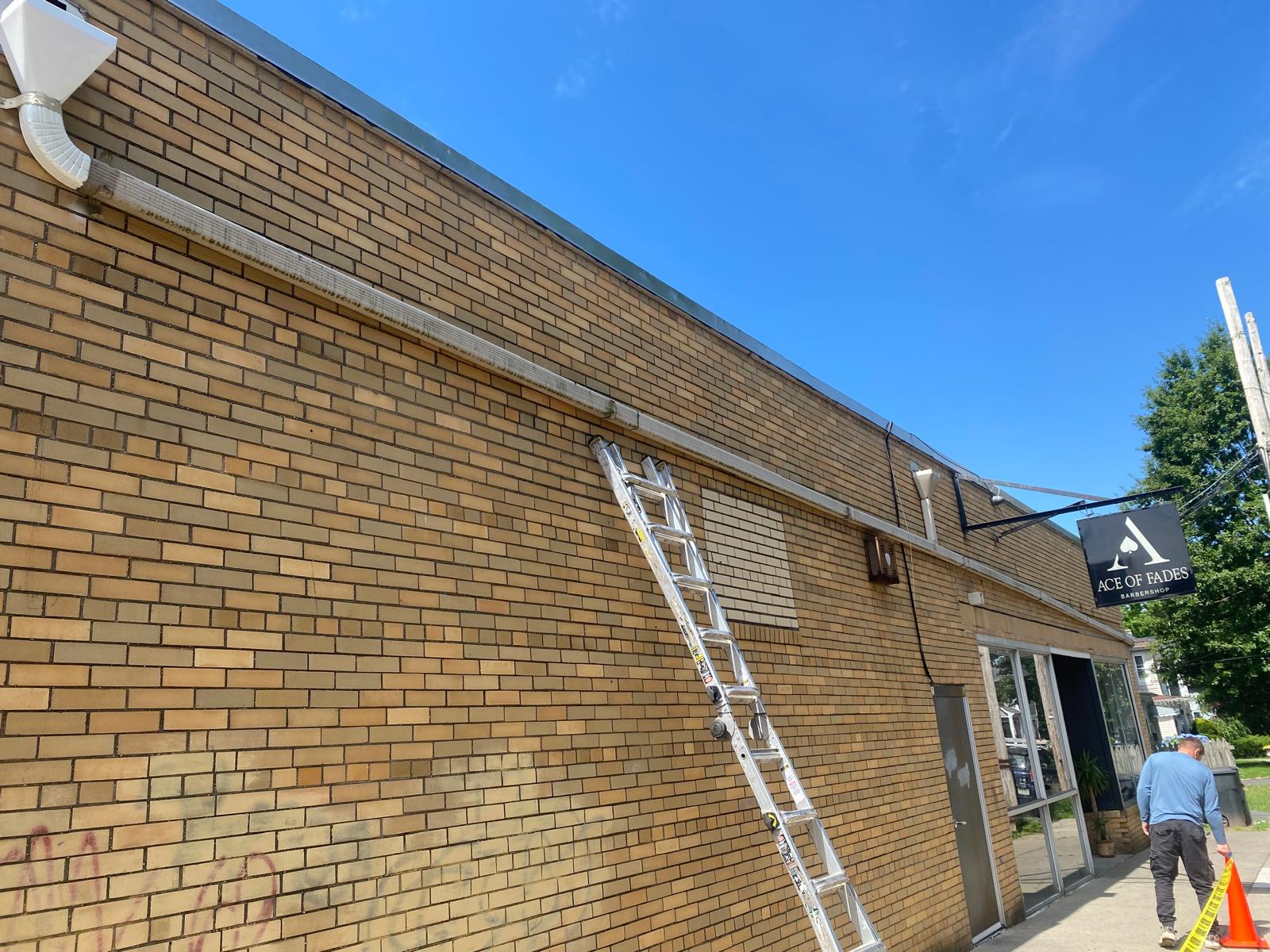
Whether it’s the heavy snows that fall on Sussex County, or the vicious nor’easters we see all too often on the Shore, even garden-variety drainage is unable to keep up with our local weather. Most of the people who own property are aware that basic troughs disperse water from a building, but few property owners are aware of the huge difference in drainage volume between residential and commercial buildings.
To ensure good performance and code compliance, you can choose to have Commercial gutter installation NJ, NJ’s local professional in the field, Commercial gutters NJ and Gutter installation NJ, install the gutter for you. Imagine your customers having to wade through a wall of runoff to get into your storefront! A good commercial gutter installation project in NJ takes heavy-gauge materials seriously because of this “Waterfall Effect” that will affect entryways, as well as creating serious slip liability.
The engineering data shows that normal residential aluminum will bend under the weight of wet snow in New Jersey and thicker commercial channels are a must if there is a possibility of structural failure. The correct drainage size is a structural safety net for your foundation. Facility managers can make long-term ROI with systems that are built to capture thousands of gallons of quick runoff, while complying with New Jersey building codes for commercial drainage.
By upgrading your NJ commercial roofing infrastructure, you can be sure that your building will continue to be shielded from severe weather all year long.

The 7-Inch Advantage: Why Size Is the First Line of Defense Against Nor’easters
If you’ve watched a summer storm turn your storefront into a waterfall, you’ve witnessed pitch-to-volume failure. While you likely know your roof’s total square footage, its steepness (pitch) dictates how violently water rushes toward the edge. Fast-moving rain easily overshoots standard residential troughs. For Garden State businesses, choosing between 6-inch vs 7-inch seamless gutters comes down to capturing that sheer volume before it destroys your foundation.
Comparing capacity differences makes the necessary upgrade obvious:
- 5-inch (Residential): Quickly overwhelmed by commercial roof runoff.
- 6-inch: Carries nearly double the water of a 5-inch system.
- 7-inch: Manages massive volume, providing essential high-capacity overflow solutions for heavy rain.
Calculating commercial downspout sizing requires simple math: plan for one square inch of downspout per 100 square feet of roof area.
Proper downspout placement prevents winter liability. Emptying a massive system onto a shaded sidewalk guarantees a dangerous ice slick by January. Instead, water must be routed safely away from foot traffic. Yet, even perfectly sized drainage will fail if the trough itself buckles under heavy snow loads. This makes your next decision crucial: choosing the correct material gauge to survive New Jersey’s freeze-thaw cycle.
Aluminum vs. Steel: Choosing Material Gauge for NJ’s Freeze-Thaw Cycle
Surviving a New Jersey winter requires more than just high water capacity; your commercial system must physically hold the crushing weight of trapped snow and ice. Think of material thickness, or “gauge,” like the difference between a flimsy soda can and a rigid soup tin. Upgrading from a residential thickness to a commercial grade is vital for preventing structural damage. The benefits of heavy-gauge aluminum gutters include resisting the severe bending and tearing caused when solid ice pulls at your building’s fascia during our brutal freeze-thaw cycles.
Beyond material thickness, eliminating structural weak points is critical because metal systems expand in 90-degree summer heat and shrink during deep winter freezes. This constant thermal expansion will eventually rip traditional pieced-together seams apart. At Deluxe Construction NJ, we advise property managers that continuous, seamless fabrication is completely non-negotiable for commercial properties looking to prevent ice-driven leaks.
Selecting the right metal ultimately depends on your budget and required lifespan:
- Aluminum (.032 Gauge): Rust-proof and cost-effective, making it the commercial standard, provided it meets heavy-duty thickness requirements.
- Galvanized Steel: Unmatched for industrial snow load strength. However, evaluating galvanized steel vs copper gutter durability reveals that steel will eventually rust over decades of moisture exposure.
- Copper: A premium, lifetime investment that naturally resists corrosion while offering historic aesthetic appeal.
With durable metal secured, the next priority is shaping it to match your building’s specific architectural and volumetric needs.

Box Gutters vs. K-Style: Matching System Geometry to Your Building’s Architecture
While thickness ensures durability, a gutter’s physical shape determines its total water capacity. K-style profiles mimic exterior crown molding, blending seamlessly into New Jersey retail storefronts where aesthetics matter. Conversely, sprawling commercial spaces need pure volume over visual appeal. This is where heavy-duty box gutter systems for warehouses excel. Their deep, rectangular geometry holds massive amounts of water, acting as a critical catch basin when summer storms dump localized floods onto large, flat properties.
Managing that tremendous runoff requires keeping those wide channels completely clear. Since flat structures lack a steep pitch, simple debris clogs rapidly cause dangerous pooling. Pairing a high-volume box profile with a reliable industrial leaf guard system installation guarantees water continuously moves toward the downspout. Maintaining this unobstructed flow is your strongest tool for ice dam prevention for flat roofs, stopping trapped freezing water from backing up under the roofing membrane and destroying interior assets.
Even perfectly shaped troughs must account for natural thermal movement. Because local weather brings extreme temperature swings, long metal runs constantly expand and contract. To prevent this shifting from buckling the system, contractors integrate expansion joints—specialized flexible sections allowing the metal to “breathe” safely. Properly installing these pressure-relief components highlights the necessity of strict adherence to regional building codes and safety standards.
Staying Within the Lines: Navigating NJ Building Codes and Safety Standards
Navigating local regulations is just as critical as choosing the right materials, especially when a single code violation can trigger hefty municipal fines. Complying with New Jersey commercial property exterior maintenance requirements ensures your drainage system manages water responsibly, preventing overflow from flooding neighboring businesses or freezing on public sidewalks. Before beginning any commercial gutter installation NJ project, local inspectors expect your building to meet four essential benchmarks:
- Properly sized downspouts engineered to handle maximum storm volume without backing up.
- Water discharge plans that route runoff safely away from pedestrian walkways.
- Heavy-duty fastening systems specifically rated for Garden State snow and wind loads.
- Proper integration with existing municipal stormwater management infrastructure.
Beyond the physical hardware, the team working on your roof introduces a separate layer of business liability. Hiring crews that strictly adhere to OSHA safety standards for gutter contractors protects your company from devastating lawsuits if an accident occurs on your property. Always verify your professionals carry comprehensive workers’ compensation and liability insurance before they set up a single ladder. Once safely secured, keeping your fully compliant system operational becomes the ongoing priority.
Protecting Your Investment: A 4-Season Maintenance Schedule for Garden State Property Managers
New Jersey weather is relentless, shifting violently from blistering summer heat to sudden freezing winter storms. This extreme temperature swing creates the dreaded freeze-thaw cycle—where trapped water expands into ice overnight and melts by noon. Without a dedicated gutter maintenance NJ schedule for property managers, this expanding ice can physically pry heavy-duty metal away from your building. Proactive care is the only reliable way to extend your system’s lifespan to 20+ years and avoid unexpected bills by arranging prompt gutter repair NJ when needed.
Catching minor issues early prevents catastrophic structural damage. You can easily spot the early signs of commercial roof drainage failure by walking your property’s perimeter after a storm. Look for sagging metal, rust spots on the trough, or mud splattered against your brickwork. That mud is a symptom of splash-back erosion, which happens when overflowing water repeatedly hammers the ground, eventually digging trenches that expose your foundation to severe water damage.
To protect your investment from these threats, implement a bi-annual clearing routine alongside a monthly maintenance checklist for commercial facility managers:
- Clear all leaves and debris from troughs before winter freezes.
- Inspect expansion joints and brackets for seasonal looseness.
- Check the ground below downspouts to verify water discharges away from foundations.
Staying on top of routine gutter maintenance in NJ ensures your building survives the next severe nor’easter. Consistent upkeep is vital, but true protection begins with a sound installation strategy.

Your Commercial Gutter Action Plan: From Inspection to Installation
You no longer have to look at an overflowing drainage system and wonder if a quick patch will survive the next winter freeze-thaw cycle. You now possess the insight to create a long-term budget that weighs endless temporary repairs against a proper gutter replacement NJ, ensuring maximum return on investment and code compliance for your property.
Before committing to a commercial gutter installation in NJ, protect your building’s structural integrity by asking your contractor these five essential questions:
- Are your materials true commercial-grade, such as 0.032 gauge aluminum or heavier?
- Do you calculate system sizing based on New Jersey’s specific storm and snow load codes?
- How do you integrate expansion joints to handle our extreme seasonal temperature shifts?
- Can you provide insurance documentation specifically rated for commercial properties?
- What are your explicit warranties on both materials and installation labor?
Stop viewing drainage as a seasonal maintenance headache and start treating it as a vital shield for your overall property value. Execute a drainage upgrade that protects your customer experience and foundation before the next severe weather event arrives. Schedule a comprehensive, professional site inspection with a recognized local specialist like Deluxe Construction NJ to evaluate your property’s specific needs.
Frequently Asked Questions
Question: What size gutters do NJ commercial properties need, and why is 7-inch often recommended?
Short answer: Size must match both roof area and pitch so fast-moving stormwater doesn’t overshoot the trough. In New Jersey’s intense rain and snow, 6-inch systems carry nearly double a 5-inch residential trough, while 7-inch seamless gutters provide the high-capacity margin needed for nor’easters and steep pitches. Use the simple rule of one square inch of downspout per 100 square feet of roof area, and place outlets so discharge doesn’t freeze on walkways—emptying onto a shaded sidewalk creates winter slip hazards.
Question: Which gutter material and gauge stand up to NJ’s freeze–thaw cycles?
Short answer: Heavy-gauge, seamless metal is critical. Commercial-grade aluminum at roughly .032 gauge is the rust-proof, cost-effective standard that resists ice-induced bending and tearing. Galvanized steel offers top-tier strength for extreme snow loads but will eventually rust over decades. Copper is a premium, long-life option with natural corrosion resistance. Regardless of metal, seamless fabrication and properly integrated expansion joints are non-negotiable to handle thermal movement and prevent ice-driven leaks.
Question: Should I choose box gutters or K-style for my building?
Short answer: Match profile to function and architecture. K-style blends with retail facades where aesthetics matter, while heavy-duty box gutters suit warehouses and large, flat roofs that demand maximum volume. For flat structures, pair box gutters with industrial leaf guards to keep wide channels clear—continuous flow is your best defense against pooling and ice damming that can back up under membranes and damage interiors. Include expansion joints on long runs to accommodate temperature swings.
Question: How do I stay compliant with NJ codes and reduce liability during installation?
Short answer: Design for capacity, safety, and integration. Inspectors expect:
- Properly sized downspouts engineered for peak storm volume
- Discharge plans that route water away from pedestrian areas
- Heavy-duty fastening rated for NJ snow and wind loads
- Proper tie-in to municipal stormwater infrastructure
- Also ensure crews follow OSHA safety standards and carry workers’ compensation and liability insurance—this protects you from fines and accidents.
Question: What maintenance keeps a commercial system performing for 20+ years?
Short answer: Proactive, year-round care. After storms, walk the perimeter to spot sagging metal, rust, or mud “splash-back” that signals overflow and foundation risk. Follow a bi-annual cleanout (especially before winter) and a monthly checklist:
- Clear debris from troughs and guards
- Inspect brackets and expansion joints for seasonal looseness
- Confirm downspouts discharge away from the foundation
- Prompt repairs prevent small issues from becoming costly structural damage—and help your system survive the next nor’easter.