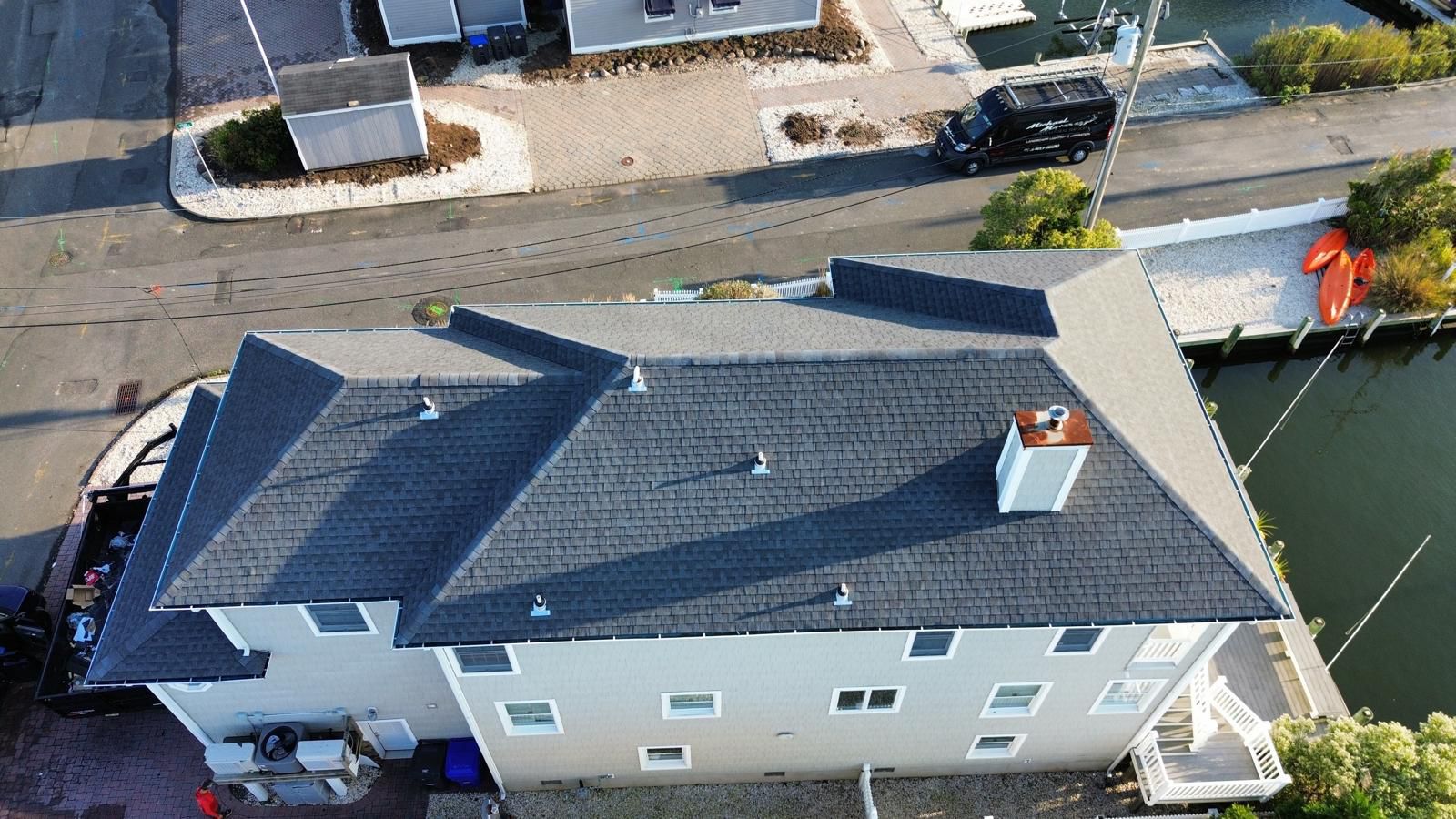
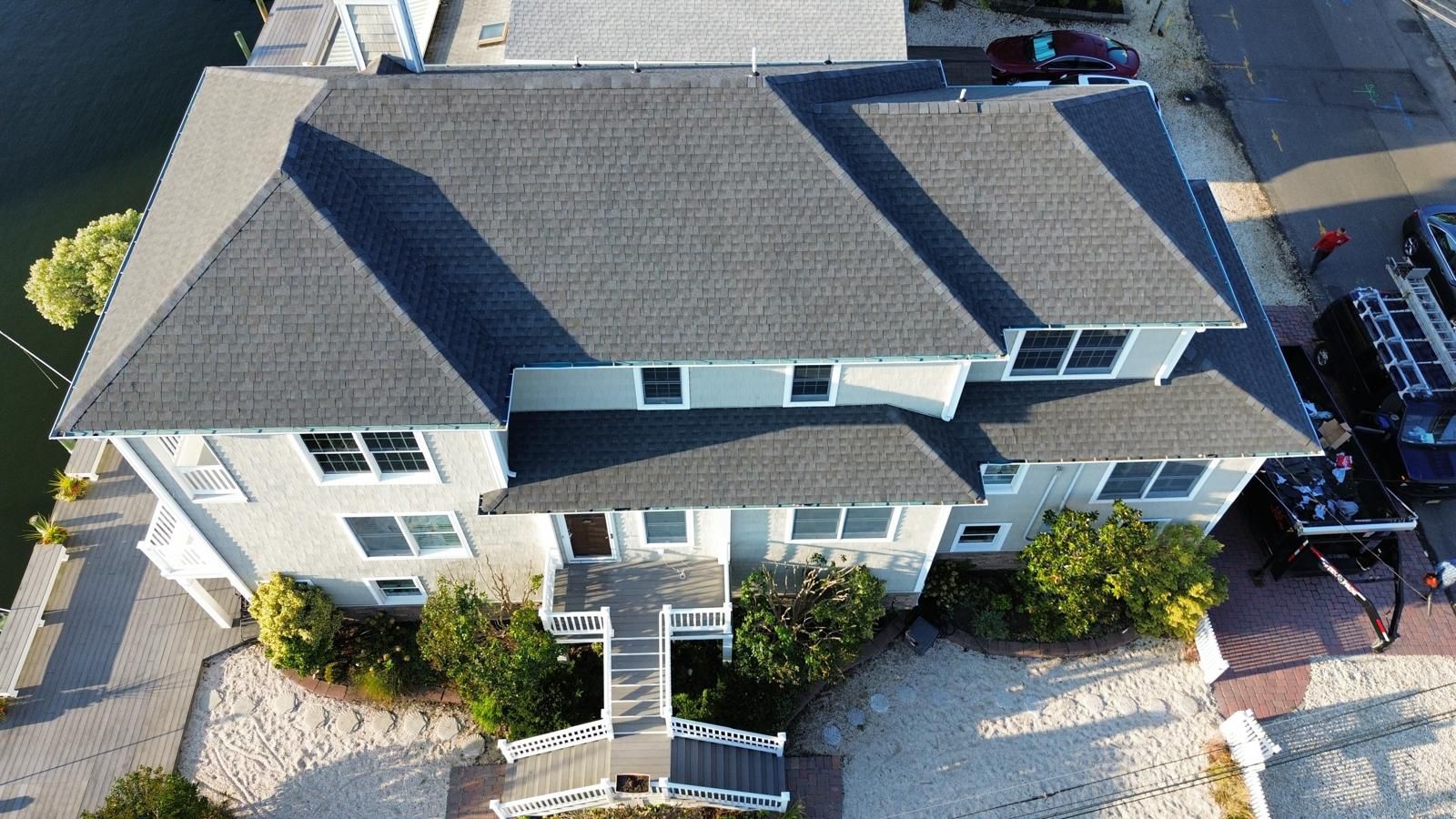
New Jersey roofs have to handle humid summers, freeze-thaw winters, coastal wind, heavy rain, and sudden storm damage, so the right material is not just about appearance. Deluxe Construction NJ LLC is a fully licensed and insured residential and commercial roofing contractor based in Ridgefield Park, New Jersey. The team helps homeowners, property managers, and business owners compare roofing materials NJ properties actually need, then installs systems built for the slope, structure, and exposure of each roof. Serving Bergen County and northern New Jersey, Deluxe Construction NJ LLC handles roofing projects ranging from residential roofing NJ replacements to flat commercial roof systems, leak repairs, skylight work, ventilation upgrades, gutters, flashing, and siding coordination. If you are searching for roofing contractors NJ property owners can call for practical guidance, the goal is simple: choose a roof that protects the building, drains correctly, and fits the way the property is used. Which roofing material works best for your New Jersey property? The best roofing material depends on your roof pitch, drainage, building type, budget expectations, and local exposure. A steep-slope home in Bergen County may benefit from high-grade architectural asphalt shingles, while a low-slope commercial building in Jersey City, Bayonne, Kearny, Lyndhurst, or Wayne may need a flat roofing or single-ply system such as TPO. There is no one-size-fits-all answer, which is why a proper roof inspection matters before any roofing installation NJ project begins. For many homes, architectural asphalt shingles offer a strong balance of curb appeal, durability, and repairability. For low-slope roofs, especially on commercial buildings or mixed-use properties, single-ply roofing can create a more appropriate waterproofing surface than standard shingles. When a building owner asks about the best TPO roofing material in Jersey City NJ, the right answer starts with the roof’s condition, insulation needs, drainage points, seams, penetrations, and expected foot traffic. Roofing materials matched to New Jersey weather New Jersey weather can be rough on roofs because moisture and temperature swings stress materials in different ways. Hot sun can dry and age surfaces, winter ice can exploit weak flashing, and wind-driven rain can push water beneath loose shingles or poorly sealed edges. Choosing the Right Roofing Material for NJ Climate means thinking about the full roofing system, not just the visible surface. Common options include: A good roofing material company Wayne NJ property owners contact should be able to explain why one product fits a building better than another. The right choice is not always the most expensive option; it is the system that matches the roof’s shape, exposure, and maintenance needs. Residential roof replacement with complete tear-offs Deluxe Construction NJ LLC provides roof replacements that can include full structural tear-offs and new installations with high-grade architectural asphalt shingles, flat roofing, and single-ply commercial systems. A full tear-off allows the crew to inspect the decking, identify hidden damage, and correct weak areas before the new roof is installed. That step is especially important when a roof has recurring leaks, soft spots, poor ventilation, or multiple old layers. For homeowners, a replacement is also an opportunity to improve the entire roof assembly. That may mean replacing damaged decking, upgrading underlayment, correcting flashing, improving attic ventilation, and making sure gutters and roof edges support proper drainage. Instead of covering old problems, the goal is to build a clean, watertight system from the structure outward. During a typical replacement planning process, the team evaluates: This approach helps property owners avoid the mistake of focusing only on shingles or membrane color while overlooking the parts of the roof that prevent moisture problems. TPO and flat roofing for commercial and low-slope buildings TPO is often discussed for flat and low-slope roofs because it is a single-ply membrane system designed for surfaces where standard shingles are not appropriate. Building owners comparing TPO roofing material in Jersey City NJ should pay close attention to installation quality, seam work, edge details, insulation, and drainage. The product matters, but the workmanship behind it is what helps the system perform. Deluxe Construction NJ LLC installs flat roofing and single-ply commercial systems for suitable properties across Bergen County and northern New Jersey. Whether a customer is searching for the best TPO roofing material in Bayonne NJ, the best TPO roofing material in Kearny NJ, or the best TPO roofing material in Lyndhurst NJ, the real priority is matching the membrane to the roof’s structure and usage. A roof with heavy HVAC equipment, frequent maintenance traffic, or ponding water concerns needs a more detailed evaluation than a roof with simple open surface area. Flat roof planning often includes: For low-slope properties, a carefully installed membrane can reduce leak risks caused by trapped water and poorly detailed transitions. The key is to treat the roof as a connected waterproofing system, not just a surface covering. Emergency leak repair when storms hit Roof leaks rarely happen at a convenient time. Deluxe Construction NJ LLC provides emergency leak repairs with rapid dispatch for wind, storm, or tree damage, including patching leaking shingles to help prevent interior water damage. Fast response matters because a small opening in the roof can quickly affect insulation, ceilings, walls, flooring, and electrical areas. Emergency roofing services NJ property owners may need include temporary patching, shingle repair, storm damage assessment, flashing inspection, and leak source identification. If a branch has struck the roof, high wind has lifted shingles, or heavy rain has exposed a weak seam, the first step is stopping active water intrusion. After the immediate leak is controlled, the team can recommend whether a permanent repair or broader replacement is the more practical next step. Property owners should call for help when they notice: A quick patch is not always a complete solution, but it can protect the interior while the roof is inspected and a long-term repair plan is prepared. Skylights, ventilation, flashing, gutters, and siding coordination A roof can fail even when the main roofing material is good if the surrounding details are neglected. Deluxe Construction NJ LLC offers specialized installation and resealing
Liquid Roofing Systems In New Jersey
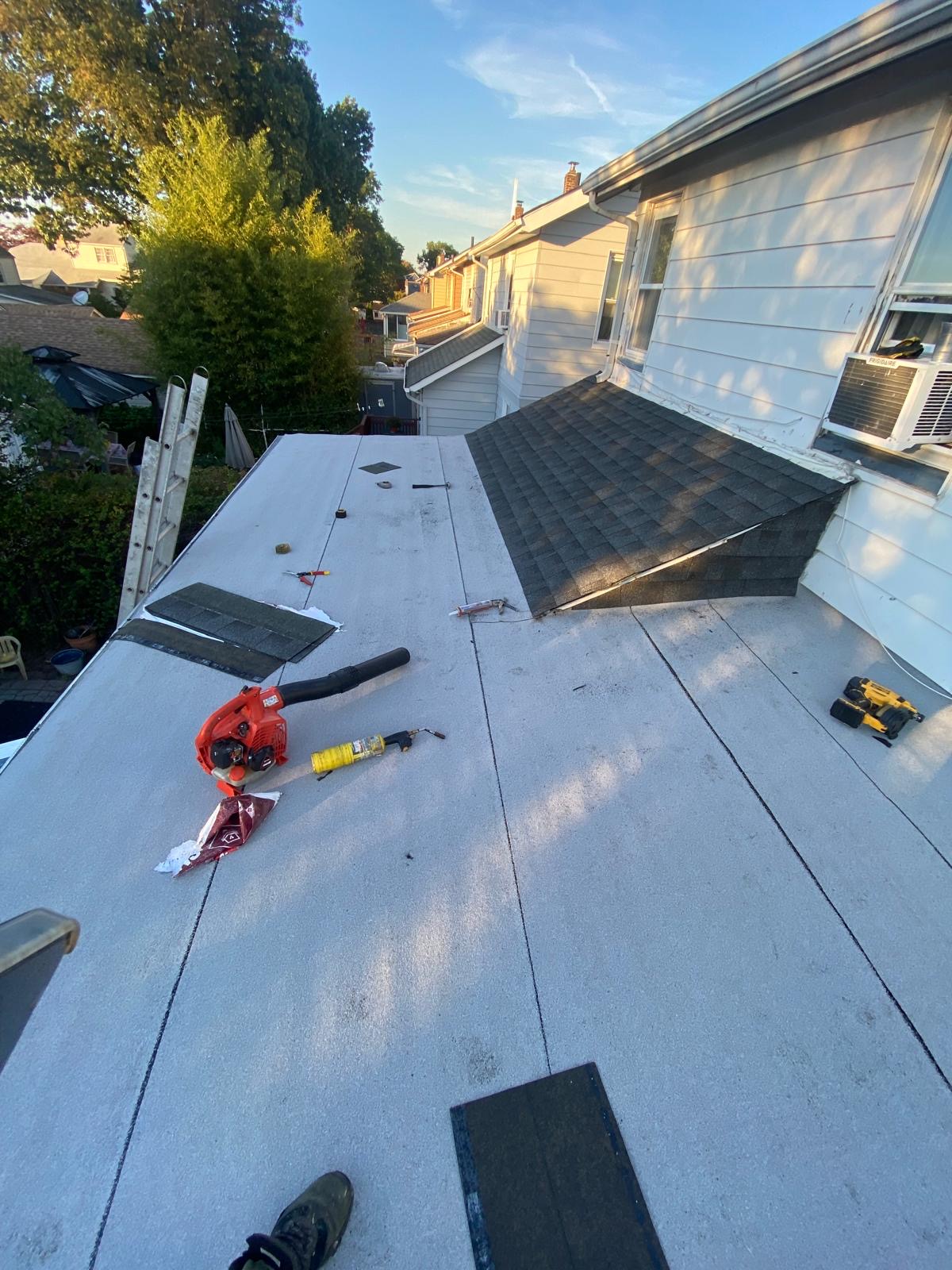
DELUXE CONSTRUCTION NJ LLC is a licensed exterior construction and roofing contractor based in Ridgefield Park, New Jersey. As a full-service exterior specialist, the company specializes in comprehensive home improvement services for residential and commercial clients across the region, including roofing, siding, gutters, chimney work, masonry, and concrete services. For property owners comparing flat roof solutions, liquid applied roofing can be a practical way to restore waterproofing performance without jumping straight to a full tear-off. Liquid roofing systems in New Jersey are especially relevant because flat and low-slope roofs face heavy rain, summer heat, winter freeze-thaw cycles, rooftop equipment, and constant drainage demands. The right system can help extend roof life, reduce leak risk, and protect the building envelope, but only when the existing roof is a good candidate and the installation is handled correctly. What are liquid roofing systems? Liquid roofing systems are seamless waterproofing systems applied in fluid form and cured directly on the roof surface. Unlike loose sheets, rolls, or panels, liquid applied roofing conforms to the roof’s shape, wrapping around drains, curbs, penetrations, seams, and flashing transitions where many leaks begin. A true liquid roofing system is more than a quick coating. It may include cleaning, repairs, primer, reinforced fabric or fleece, base coats, detail work, and a finish coat designed to create a continuous membrane. When properly specified, it can be used over many existing flat roof materials, including modified bitumen, EPDM, TPO, metal, and other compatible substrates. That difference matters. A basic coating may refresh a roof surface that is already in good condition. A reinforced liquid roofing system is designed to provide more complete waterproofing protection and may be a better option for roofs with aging seams, complex details, or widespread surface wear. Why New Jersey flat roofs need the right restoration strategy Flat roofs in New Jersey work hard. Rainwater must drain efficiently, snow and ice can linger, and freeze-thaw movement can stress seams, flashing, and older repair areas. In denser towns and commercial corridors, roofs also carry HVAC units, vents, skylights, exhaust equipment, satellite mounts, and other penetrations that increase the number of vulnerable details. This is why choosing between repair, restoration, and replacement should start with a roof evaluation instead of a product preference. If the roof is structurally sound, mostly dry, and still well adhered, liquid applied roofing may offer a cost-conscious restoration path. If the roof has trapped moisture, failing insulation, severe ponding, or widespread membrane failure, restoration alone may only cover the symptoms. For residential and commercial roofing NJ projects, the best results usually come from pairing material knowledge with local field experience. New Jersey roofing conditions are not identical from one building to the next, so drainage patterns, shade, rooftop traffic, and existing materials all deserve attention. Common liquid roof materials and where they fit Different liquid roof products perform differently. The right choice depends on the roof’s condition, slope, drainage, use, and exposure. Silicone systems Silicone is often considered for flat roofs that experience frequent wet conditions or areas of ponding water. It offers strong UV resistance and remains flexible, which can help in exposed rooftop environments. However, silicone can attract dirt over time, may become slippery when wet, and needs careful surface preparation for proper adhesion. Acrylic coatings Acrylic systems are water-based, reflective, and often economical. They can be a useful option for roofs with good drainage and limited ponding. In colder or wetter environments, though, acrylic may not be the best fit for areas where water sits for long periods, so roof slope and drain performance should be reviewed carefully. PMMA systems PMMA liquid roofing systems cure quickly and are often used where durability, detail work, and faster return to service are priorities. Many PMMA assemblies are reinforced with fleece, helping them perform around complex penetrations and transitions. They can be a strong fit for demanding roofs, but they require trained application and careful planning. Polyurethane systems Polyurethane coatings are known for toughness and flexibility. Some systems are suitable for roofs with foot traffic, rooftop equipment access, or challenging weather exposure. A common approach uses different polyurethane layers for base waterproofing and UV-stable top protection. Spray polyurethane foam Spray polyurethane foam can provide insulation and waterproofing as part of a roof assembly. It can improve thermal performance while creating a monolithic surface, but it requires specialized equipment, correct weather conditions, and skilled installation. It is not the right answer for every roof, especially where detailing, overspray control, or budget limitations are concerns. Liquid roofing versus coating, repair, or replacement A quick patch may solve an isolated leak, and a full replacement may be necessary when the roof has reached the end of its service life. Liquid roofing sits between those options when the existing roof still has enough integrity to restore. Use this simple decision framework before choosing a path: This is where experienced nj roofing services become important. A contractor should look beyond the visible surface and check seams, drains, flashing, insulation condition, previous repairs, and substrate compatibility before recommending any restoration system. How do you know if your flat roof is a good candidate? A flat roof may be a good candidate for liquid roofing if the existing membrane is firmly attached, the insulation is dry, the deck is sound, and drainage issues can be corrected before the system is installed. The roof should be cleaned, tested for adhesion where needed, and inspected for trapped moisture, because liquid applied roofing performs best when it is bonded to a stable surface. Property owners should be cautious if leaks have been ignored for a long time. Water beneath the membrane can spread beyond the obvious leak location, and coating over wet insulation can lock in a problem rather than solve it. On larger commercial roofing NJ projects, moisture scans, core cuts, or other diagnostic steps may be recommended before finalizing the scope. A proper evaluation should answer several practical questions: The installation process should be disciplined Liquid roofing is not simply “paint
Commercial Flat Roof Coatings in New Jersey – Types, Costs, Lifespan
A commercial flat roof coating is a liquid-applied, seamless waterproofing layer that restores an existing roof instead of replacing it. For most New Jersey flat roofs, the right choice comes down to drainage: Coating only works if the roof underneath is still sound. A coating cannot dry out saturated insulation or fix a failed deck. That makes the inspection the most important step, not the product. This guide covers each coating type, how to match one to your roof, what it costs, how long it lasts, and the point where replacement becomes the better investment. Quick Answers Question Short answer Best coating for a commercial flat roof? Depends on drainage and substrate. Silicone for ponding, acrylic for well-draining roofs, polyurethane for traffic and abrasion. How long does it last? Roughly 10–20 years depending on chemistry, thickness, and roof condition. Warranty length typically tracks the dry film thickness applied. Cheaper than replacement? Usually, when the roof is dry and structurally sound. Can you coat over an existing roof? Yes, over most membranes and metal, after cleaning, repairs and a compatibility test. Does it stop leaks? It seals seams, fasteners and minor splits. It does not fix wet insulation or deck damage. What Commercial Roof Coatings Do (and Don’t Do) A coating forms a continuous, elastic film over the existing roof surface. It does three jobs: A coating is not a structural repair, a replacement for failed insulation, or a fix for a roof with a drainage design problem. Treat it as a restoration system for a roof with good bones. Is Your Roof a Candidate? The Four Checks Before comparing products, a roofer should confirm these: 1. Is the insulation dry?This is the make-or-break question. Trapped moisture beneath a coating can’t escape and leads to blistering and further deterioration. Moisture surveys (infrared, nuclear or capacitance scanning, or core samples) identify wet areas. Wet sections get cut out and replaced before coating. 2. How does the roof drain?Look for ponding that remains 48 hours after rain. Acrylic coatings are generally not designed for standing water. For example, Sika’s acrylic product data sheet says its system isn’t intended for ponding-water applications and that roofs prone to ponding should be resloped. GAF’s Unisil silicone data sheet, by contrast, describes protection against leaks from ponding water across a range of substrates. 3. What is the substrate?TPO, EPDM, PVC, modified bitumen, built-up roofing (BUR), metal and spray polyurethane foam (SPF) all accept coatings, but each needs its own cleaning method, primer and compatibility test. 4. How much life is left?If the membrane is brittle, widely split, or has multiple failed repair areas, coating is a short-lived patch. Commercial Roof Coating Types Compared Silicone Acrylic (elastomeric) Polyurethane Handles ponding water Yes No, re-emulsifies under standing water Tolerates incidental ponding only UV resistance Excellent Good, erodes faster Good (aliphatic types resist UV best) Reflectivity High (white) High (white) Varies by formulation Foot traffic / abrasion Moderate Moderate Strong Application conditions Moisture-cure, tolerant of humidity Needs dry weather to cure Moisture-cure, sensitive to application conditions Relative cost Mid to high Lowest Mid to high Best for Dead-flat, ponding, single-ply restoration Draining roofs, tight budgets, cool-roof goals Walkable roofs, equipment areas, hail or abrasion risk Cost and performance notes are general industry characteristics. Specific products vary by manufacturer data sheet. Silicone Roof Coatings Silicone keeps its film under standing water, which is why it’s the default for roofs with chronic low spots. It also holds up well against UV. The tradeoff is dirt pickup (silicone surfaces attract dust) and the fact that almost nothing bonds well to a cured silicone surface later, so choosing it is a long-term commitment. Only silicone should be recoated onto silicone. Acrylic Roof Coatings Acrylic is the economical choice for roofs that slope to drains. It’s water-based, easy to apply, highly reflective in white, and widely used for commercial roof coating restoration on metal, BUR and modified bitumen. Its weakness is ponding. Standing water softens it, and failures show up in the same low spots. Polyurethane Roof Coatings Polyurethane is tougher than the other two against impact and abrasion, so it’s used where there’s regular rooftop traffic, such as HVAC service paths, or where hail is a concern. It’s usually applied as a base coat with a UV-stable topcoat. Matching the Coating to the Roof Existing roof Typical coating approach Metal Acrylic or silicone, after rust treatment, fastener sealing and seam work TPO / PVC Usually silicone or a manufacturer-approved system after thorough cleaning (TPO is hard to bond to) EPDM Primer plus acrylic or silicone, depending on drainage Modified bitumen / BUR Acrylic, with ponding areas addressed or silicone used instead SPF (spray foam) Silicone or acrylic, applied in full-thickness layers; foam provides insulation while the coating provides the weather layer A TPO roof coating or EPDM roof coating project always starts with a bond test on the actual roof. Skipping that test is a leading cause of peeling. NJ Conditions That Affect Coating Choice New Jersey’s weather is hard on flat roofs, and it shapes how coatings should be specified and scheduled. This section reflects professional judgement rather than a published study. How Much Do Commercial Flat Roof Coatings Cost? Costs vary widely by region, roof access, prep and chemistry. As a planning range only, many contractors quote coating systems at roughly $1.50 to $5.00 per square foot installed. Acrylic sits at the lower end and silicone or high-build systems at the upper end. Full membrane replacement is commonly several times that figure. What moves the price: Is it cheaper than replacement? Usually yes, often by a large margin, but only on a roof that qualifies. If a significant share of the insulation is wet, coating isn’t the cheaper path. It’s the more expensive one, because you pay for the coating and then for the replacement. EXPERT INPUT OPPORTUNITY: Replace the planning range above with Deluxe Construction NJ’s actual typical ranges, or publish a sample “how we estimate” breakdown. Real local pricing
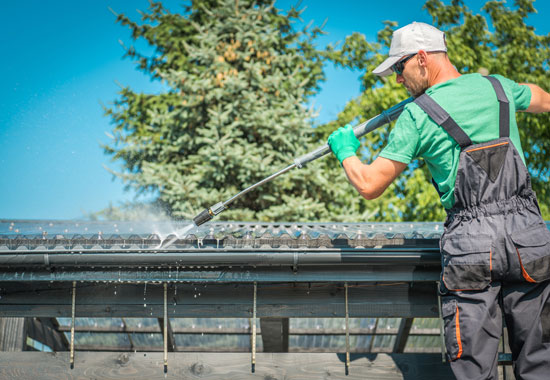
Can Gutter Guards Cause Ice Dams?
No — gutter guards don’t cause ice dams. Ice dams form because of heat escaping from inside your attic, not because of anything installed on your gutters. The root cause is a warm attic melting snow on the upper roof, with that meltwater refreezing once it reaches the colder eaves. That said, the type of gutter guard you have can make an existing ice dam worse: guards that sit up off the gutter edge or form a solid raised barrier can trap snow and meltwater right at the roofline, where it refreezes into a bigger, harder dam than would form on an open gutter. So the honest answer has two parts: gutter guards aren’t the cause, but a poorly designed guard can be a contributing factor once conditions for an ice dam already exist. Below is the full picture — what actually drives ice dam formation, which gutter guard designs handle winter well, and what to do about it. What Actually Causes Ice Dams Ice dams form through a specific sequence, and every link in that chain has to be present: University extension research on building science attributes ice dams primarily to uneven roof surface temperatures driven by attic heat loss — not to weather alone. Nonuniform roof surface temperatures lead to ice dams, and for them to form there must be snow on the roof while higher portions of the roof’s outside surface are above freezing and lower surfaces are below freezing. That’s why two identical snowstorms can produce very different results on two different houses: the deciding factor is almost always how much heat that specific attic is leaking, not how much snow fell. umn The Two Real Causes: Insulation and Ventilation Gaps Ice dams are often caused by heat loss from the attic, temperature swings, roof design, clogged gutters, and heavy snowfall, and even well-insulated homes can experience them due to sunny days, cold nights, and fluctuating roof surface temperatures. The two thermal-envelope problems that matter most are: retrofoam Poor attic ventilation compounds both problems, since a well-ventilated attic stays closer to outdoor temperature even when some heat does leak in, keeping the whole roof deck more uniform. Do Gutter Guards Make Ice Dams Worse? Sometimes — and it depends entirely on the design. The mechanism is straightforward: gutter guards sit at the exact spot where meltwater is already refreezing. A guard that changes how snow and water move across that edge can either have no real effect or actively make things worse. Gutter Guard Type Winter Behavior Micro-mesh (fine stainless steel mesh, sits flush with gutter) Generally performs best; low profile doesn’t trap snow against the roof edge Reverse-curve / surface-tension guards Can create a raised lip that holds snow against the shingles, where it refreezes and can extend an ice dam higher up the roof Solid-cover guards Can trap snow on top of the guard surface, blocking drainage and prolonging the freeze-thaw cycle at the edge Cheap DIY foam or screen inserts Prone to becoming brittle, warping, or shifting in freeze-thaw cycles, sometimes creating new gaps that ice can build around Brush-style guards Generally low profile, similar performance to micro-mesh, though bristle spacing varies by product The practical takeaway: gutter guards don’t create the thermal conditions that cause ice dams — that’s entirely an attic insulation and ventilation issue — but a bulky or raised guard design can give an ice dam a shelf to build on once one starts forming. Can Clogged Gutter Guards Cause Ice Dams? Not directly, but a clogged gutter — guarded or not — removes one of your last lines of defense. Gutters play a role in ice dam formation because they’re one of the coldest parts of the roof assembly, and meltwater that flows into them naturally freezes first, building up until it blocks drainage. If a gutter guard is clogged with debris that built up before it was installed, or if the mesh has been overwhelmed by heavy wet leaves in fall, water can pool and freeze at the gutter line the same way it would in an unprotected, clogged gutter. This is a maintenance issue, not a design flaw in the concept of gutter guards themselves — a clean, properly installed, quality guard does not have this problem. retrofoam Should You Remove Gutter Guards Before Winter? For most quality gutter guard systems, no. Removing an effective, snow-load-rated guard for the winter leaves the gutter exposed to whatever debris is still around — pine needles, late-falling leaves, and wind-blown material — which can clog the gutter and cause the exact freeze-and-back-up problem you removed the guard to avoid. The exception is a low-quality guard that’s already showing signs of bending, warping, or separating from the gutter under snow load; in that case, a full replacement with a better-rated product makes more sense than removing it and going bare. How to Actually Prevent Ice Dams Since the cause is thermal, not mechanical, prevention starts inside the attic — not at the gutter line. Long-Term Fixes (Address the Cause) Short-Term Fixes (Manage an Active Situation) Ice Dam Damage and What It Costs to Fix Left alone, an ice dam’s trapped water backs up under the shingles and can cause: interior ceiling and wall stains, damaged insulation, mold growth, peeling paint, rotted roof decking or fascia, and gutters pulled loose from the fascia board under the ice’s weight. Ice dam removal itself (professional steam removal, the safest method for the roofing material) commonly runs in the few-hundred-dollar range for a typical residential roof edge, while repairing the resulting damage — a compromised section of roof decking, damaged gutters, or interior drywall and insulation — can run considerably higher depending on how long the leak went undetected. Common Mistakes Homeowners Make When to Call a Professional A homeowner can reasonably rake snow off a single-story roof edge and run a de-icer sock across an active dam as a short-term fix. What’s harder to self-diagnose is the actual cause — how much
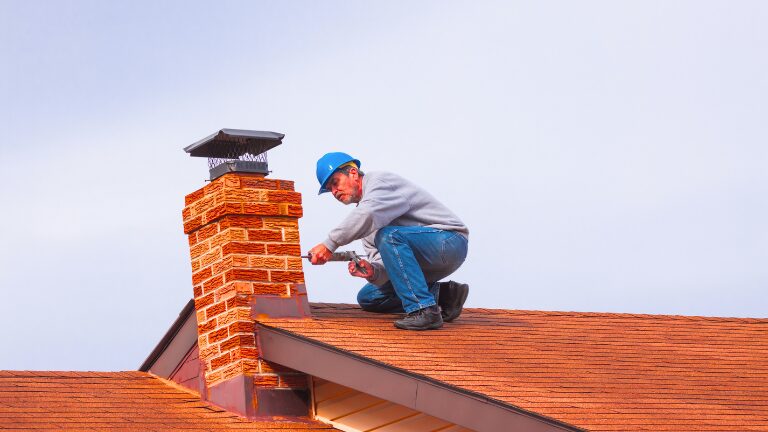
What Are Typical Chimney Inspection Costs?
A chimney inspection typically costs $150 to $600, with most homeowners paying around $300 to $450 for a standard Level 1 inspection. A Level 2 inspection, which adds a video camera scan of the flue interior and is required for home sales, typically runs $200 to $600. In the New York metro area, a Level 1 inspection bundled with an annual sweep commonly runs $189 to $349, while a Level 2 camera inspection runs $289 to $479. Pricing in New Jersey generally falls in a similar range, with cost driven mainly by which inspection level you need, whether cleaning is included, and how accessible the chimney is. Most homeowners searching for this number are trying to answer one of two questions: “Is this a routine annual expense, or something bigger?” and “Why did one company quote me $150 and another $450?” The answer to both comes down to inspection level — a distinction the National Fire Protection Association (NFPA) defines clearly, and one that materially changes both scope and price. Chimney Inspection Cost by Level NFPA 211, the standard governing chimney, fireplace, and vent inspections, defines three inspection levels. Cost scales directly with how much of the chimney system the inspector has to access and document. Inspection Level Typical Cost What Triggers It Level 1 $100 – $350 Routine annual inspection; appliance replaced with a similar one Level 2 (with camera) $200 – $600 Home sale or purchase, chimney fire, severe weather event, fuel or appliance change, relining Level 3 $500 – $5,000+ Suspected hidden hazard requiring removal of chimney components or building materials to inspect How Much Does a Level 1 Chimney Inspection Cost? A Level 1 inspection costs about $100 to $350 and is the routine annual checkup NFPA 211 recommends for every chimney, regardless of how often it’s used. It covers the readily accessible portions of the chimney, flue, and connected appliance, checking for obstructions, creosote buildup, and basic structural soundness. This is the appropriate level when nothing about the chimney’s use is changing — same appliance, same fuel type, no recent damage. How Much Does a Level 2 Chimney Inspection Cost? A Level 2 inspection costs about $200 to $600, and in the NY/NJ metro area specifically, a camera-based Level 2 typically runs $289 to $479. It includes everything in a Level 1, plus a more thorough visual inspection of all accessible areas — most commonly performed with a video camera scanned down the flue to check the liner’s interior condition, joints, and any cracks not visible from the top or bottom. A Level 2 is required, not optional, in several specific situations: How Much Does a Chimney Camera Inspection Cost? The camera scan itself is what typically separates Level 2 pricing from Level 1 — expect to pay $50 to $250 more than a basic visual inspection for the camera equipment and the additional inspector time to review and document the footage. Most companies bundle the camera scan into a flat Level 2 price rather than itemizing it separately. Level 3 Chimney Inspection Cost A Level 3 inspection is the least common and most expensive, because it involves removing chimney or building components — a section of interior wall, the chimney crown, or other materials — to access and evaluate a suspected hazard that isn’t visible any other way. Costs vary enormously based on what has to be opened up, typically ranging from $500 for a small removal to $5,000+ when significant structural investigation is needed. This level is only used when a Level 1 or Level 2 inspection reveals signs of a serious hidden problem. Does a Chimney Inspection Include Cleaning? Not automatically — inspection and sweeping are billed as related but separate services. Many companies offer a combined sweep + Level 1 inspection package, which is often more cost-effective than booking them separately. In the NY/NJ metro area, this combined service typically runs $189 to $349. If your chimney hasn’t been swept recently, ask whether your quote includes cleaning or is inspection-only — this is one of the most common points of confusion in chimney service pricing. What’s Included in a Chimney Inspection? Regardless of level, a professional chimney inspection generally covers: The inspector documents findings — increasingly with photos or video regardless of level — and provides a written report noting the chimney’s condition and any recommended repairs. What Factors Affect Chimney Inspection Cost? Factor Effect on Price Inspection level (1, 2, or 3) Largest single driver — Level 2 and 3 cost significantly more than Level 1 Number of flues Multiple flues (e.g., fireplace + furnace) increase time and often cost per additional flue Chimney height and roof pitch Steep or tall roofs may require ladder work or fall protection, adding labor cost Accessibility Chimneys with limited roof access or obstructions take longer to inspect Combined with sweeping Bundled sweep + inspection is often cheaper than booking separately Age and prior maintenance history Older or long-neglected chimneys may take longer to fully assess Region Metro-area labor rates run higher than rural or suburban averages Do I Need a Chimney Inspection When Buying a House? Yes — and it should specifically be a Level 2 inspection, not a Level 1. NFPA 211 lists sale or transfer of property as one of the defined triggers for a Level 2 inspection, because a Level 1 doesn’t include the internal camera scan needed to catch liner cracks, deteriorated mortar joints inside the flue, or damage that isn’t visible from the top of the chimney. Who Pays for the Chimney Inspection When Buying a House? This is negotiated between buyer and seller like any other inspection item, and there’s no universal rule — in many transactions, the buyer orders and pays for the Level 2 inspection as part of their broader home inspection process, then uses any findings to negotiate repairs or credits with the seller. Real estate agents and attorneys on both sides typically weigh in on how this gets handled locally. A Level
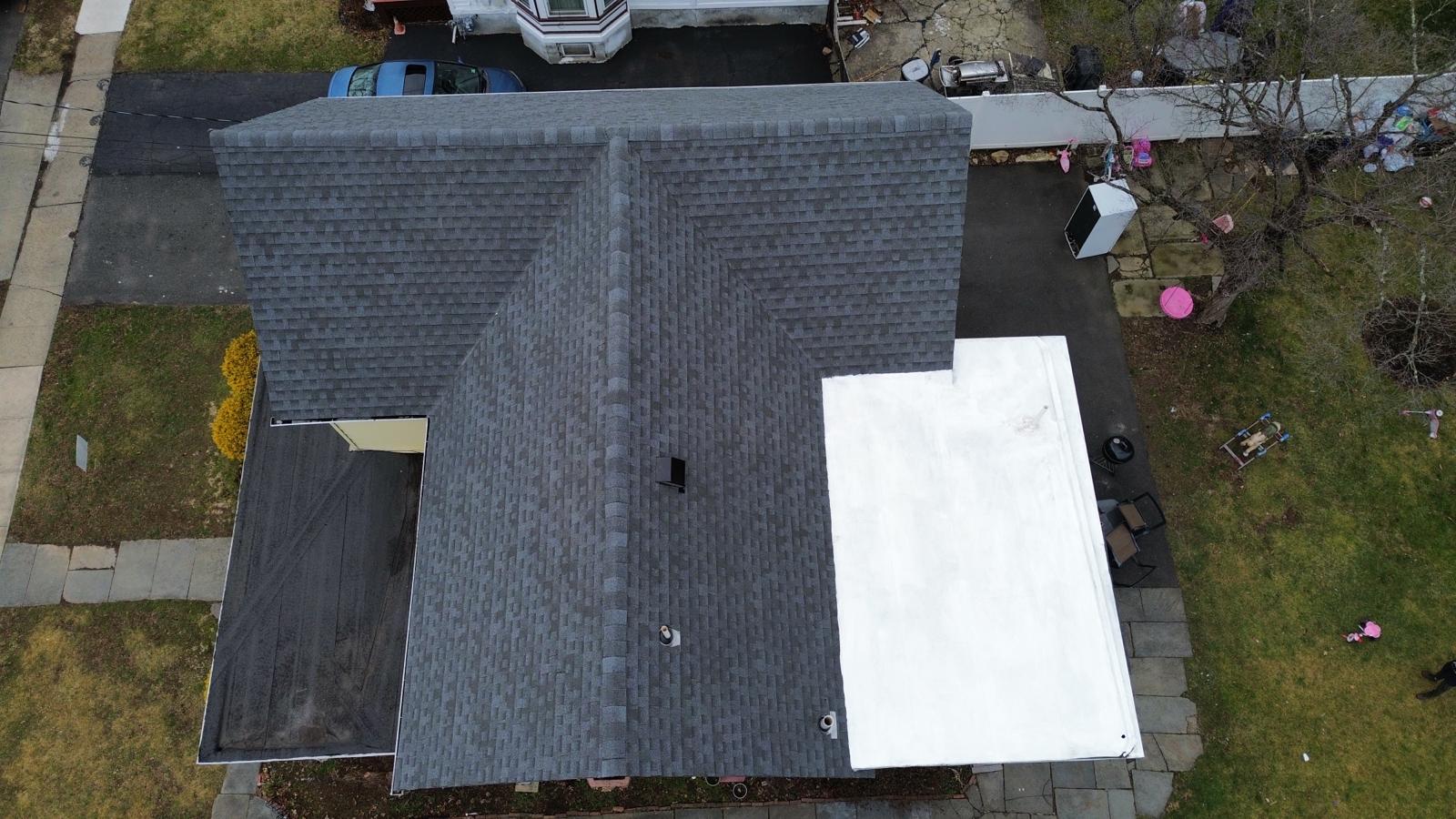
How Much Does It Cost to Put a Shingle Roof on a 2,000 Sq Ft House?
In New Jersey in 2026, putting an architectural asphalt shingle roof on a 2,000 sq ft house costs between $9,000 and $18,000 installed, including tear-off, disposal, and permit. Most homeowners land between $12,000 and $16,000. That range is unhelpfully wide, and there’s a specific reason for it that almost nobody explains: “a 2,000 sq ft house” describes two completely different roofing jobs. Same “2,000 sq ft house.” Roughly double the cost. If you’ve been comparing online estimates and getting numbers that don’t agree, this is usually why — some sources are pricing floor area, some are pricing roof area, and they rarely say which. Here’s how to work out which number applies to your house, what’s actually inside a New Jersey roofing quote, and what the line items should cost. Roof Area Is Not House Area: How to Calculate Yours Roofers price by the square. One roofing square = 100 sq ft of roof surface. Your roof surface is always larger than your ground footprint, because a sloped roof is a hypotenuse, not a flat plane — plus overhangs. Five steps to your own estimate 1. Get your ground-floor footprint, not your living area. Measure the outside of the house at ground level: length × width. A two-storey home’s footprint is roughly half its listed square footage. This is the single most common mistake homeowners make. 2. Add for overhangs. Standard NJ eaves and rakes overhang 12–18 inches. Add roughly 5–8% to your footprint. 3. Multiply by your pitch factor. Roof pitch Multiplier What it looks like 4/12 1.054 Gentle — many ranches 5/12 1.083 Common suburban 6/12 1.118 The NJ standard 8/12 1.202 Steep — walkable with care 10/12 1.302 Not walkable 12/12 1.414 Requires staging 4. Divide by 100 to get your square count. 5. Multiply by the installed price per square. In New Jersey in 2026, architectural asphalt runs roughly $490–$700 per square installed, depending on shingle grade and roof complexity. Worked example A 40 ft × 50 ft ranch at 6/12 pitch: Now the same 2,000 sq ft as a two-storey Colonial: 1,000 sq ft footprint → ~1,190 sq ft of roof → 12 squares → roughly $6,600–$8,400. Professional judgement: Use this to sanity-check quotes, not to replace them. Our field measurement on a real roof frequently differs from a homeowner’s estimate by 10–15%, because dormers, hips, bump-outs and valleys add surface that a length-times-width calculation misses entirely. What’s Actually Included in a Shingle Roof Replacement A complete New Jersey shingle replacement is not “shingles plus labour.” A quote that omits any of the following is not cheaper — it’s incomplete. Component What it does Tear-off & disposal Strip existing layer(s) to bare deck, haul to a transfer station Deck inspection & repair Replace any rotted or delaminated sheathing found Ice barrier Self-adhering membrane at eaves and valleys — required by NJ code in most of the state Underlayment Synthetic or felt across the remaining field Drip edge Metal at eaves and rakes, directing water into the gutter Starter strip Sealed first course — the actual wind-resistance anchor at the edge Architectural shingles The visible covering Valley treatment Metal or woven, depending on the detail Step & counterflashing At walls, chimneys, dormers Pipe boots New rubber or lead boots at every vent penetration Ridge cap & ridge vent Purpose-made cap shingles plus exhaust ventilation Permit & inspection Required in virtually every NJ municipality Cleanup Magnetic nail sweep, gutter clearing, site restoration Two line items to check specifically in every quote you receive: The ice barrier. The New Jersey edition of the International Residential Code (R905.1.2) requires an ice barrier extending from the eave edge to a point at least 24 inches inside the exterior wall line, in areas where the average January temperature is 25°F or less — which covers most of northern and central NJ. On a low-pitch roof or a deep overhang, that means more than one course. A single 3-foot roll at the edge does not automatically comply. The flashing. If a quote says “reuse existing flashing,” that’s a cost saving of maybe $300 that buys you a chimney leak in two winters. Step flashing is cheap; the ceiling repair it prevents is not. New Jersey Shingle Roof Cost by Grade Grade Typical NJ installed cost/square 12 squares (Colonial) 24 squares (ranch) 3-tab (budget) $380–$460 $4,600–$5,500 $9,100–$11,000 Architectural (standard) $490–$560 $5,900–$6,700 $11,800–$13,400 Premium architectural (enhanced wind) $550–$630 $6,600–$7,600 $13,200–$15,100 Class 4 impact-resistant $640–$740 $7,700–$8,900 $15,400–$17,800 Ranges reflect 2026 New Jersey market pricing for a standard 6/12 pitch with single-layer tear-off. Steep pitch, multiple existing layers, complex geometry or deck repair increase the total. Is 3-tab worth the saving? Usually not. Labour and tear-off costs are nearly identical between 3-tab and architectural — you’re only paying the material difference, typically $1,500–$2,500 on a full roof. In exchange you get roughly a decade more service life and meaningfully better wind performance. On a wind-driven-rain coast like New Jersey’s, that’s the easiest upgrade decision in the whole project. Class 4 impact-resistant shingles are worth pricing out if you’re in a hail-exposed pocket or under heavy tree cover — some insurers offer premium discounts that recover part of the upgrade over the life of the roof. Ask your carrier before you decide, not after. The Costs That Show Up Mid-Project These are the line items that turn a $13,000 quote into a $16,000 invoice. A good contractor prices them as clearly identified allowances or change orders up front. Item Typical NJ cost Rotted decking replacement $70–$125 per 4×8 sheet installed Second layer tear-off $1,000–$3,000 Permit & municipal inspection $200–$600 (North Jersey trends higher) Dumpster / disposal $350–$700 Chimney or skylight reflashing $250–$500 per penetration Ventilation upgrade (ridge vent + intake) $300–$600 Chimney cricket $300–$600 Gutter removal & reinstall $500–$2,000 The decking line is the one that matters. You cannot know how much rotted sheathing is under a roof until the shingles come off. Any contractor who promises zero deck cost on a 50-year-old house is either
What Are the Most Reliable Roofing Materials for Roof Installation?
The most reliable roofing materials for roof installation, ranked by proven service life, are natural slate (75–150+ years), clay and concrete tile (50–100 years), standing seam metal (40–70 years), synthetic composite shingles (40–50 years), and architectural asphalt shingles (20–30 years). For flat and low-slope sections, EPDM rubber and TPO membrane are the reliable choices, with EPDM holding the longest documented field record. For most New Jersey homes, the honest answer is narrower than that list. Slate and tile are magnificent and almost never appropriate for a typical NJ frame house without structural work. The realistic reliability decision here comes down to three options: architectural asphalt shingles with the right ratings, standing seam metal, or synthetic slate — plus a membrane for any flat section. And here is the part most articles skip: the material is not what fails. In 20+ years of exterior work across Bergen, Passaic, Morris and Monmouth counties, the roofs we tear off early almost never failed because someone picked the wrong shingle. They failed at the eave, the valley, the chimney, or in the attic. Material choice sets the ceiling on how long your roof can last. Installation and ventilation decide whether you ever reach it. Reliability Is a System Property, Not a Shingle Property A roof is an assembly. When any one layer is wrong, the rated lifespan of the covering becomes irrelevant. The assembly that has to be right: Field observation: Nail placement is the single most common quality failure we find on premature shingle blow-offs. A shingle nailed above the reinforced nailing strip has essentially no wind rating, no matter what the wrapper says. It will hold fine — until the first 55 mph nor’easter gust. What New Jersey Weather Actually Does to a Roof New Jersey is a genuinely hard climate for roofing, and it is hard in more than one direction at once. Freeze-thaw cycling. Northern NJ runs through dozens of freeze-thaw cycles each winter. Water gets into a hairline crack in a mortar crown or under a lifted shingle tab, freezes, expands, and widens the gap. Next cycle, it goes deeper. This is why chimney crowns and masonry parapets fail here faster than the roof field does, and why chimney repair is so often bundled into a roof replacement. Ice damming. Warm air escapes a poorly ventilated attic, melts snow mid-slope, and the meltwater refreezes at the cold overhang. The dam backs water uphill, under the shingles. Shingles shed water; they do not hold back standing water. Only an ice barrier does. Nor’easters and wind-driven rain. Sustained wind with rain driven sideways is the NJ signature event, not the single hurricane. Wind-driven rain exploits ridge caps, hip laps and headwall flashing. Heavy wet snow. Coastal-influenced snow here is dense. Snow load matters for low-slope sections and for anyone considering tile or slate. Salt exposure at the shore. On barrier island and near-shore work — our Broad Ave, Mantoloking (08738) roof installation is a good example — salt aerosol attacks fasteners and unprotected metal. Coastal jobs need stainless or properly coated fasteners and aluminum rather than bare steel accessories. Inland Bergen County jobs do not. The code language that matters in NJ The New Jersey edition of the International Residential Code (Section R905.1.2) requires an ice barrier for asphalt shingles, metal roof shingles, mineral-surfaced roll roofing, slate and slate-type shingles, and wood shingles and shakes in areas where the average daily January temperature is 25°F or less. The barrier must be at least two cemented layers of underlayment or a self-adhering polymer-modified bitumen sheet, extending from the eave edge to a point at least 24 inches inside the exterior wall line. Two practical consequences homeowners rarely hear: The Most Reliable Roofing Materials, Ranked 1. Natural Slate — 75 to 150+ years Quarried stone, installed one tile at a time. Nothing else on the market has slate’s track record; functioning slate roofs on 19th-century NJ housing stock are not rare. 2. Clay and Concrete Tile — 50 to 100 years Clay tile is fired, essentially colourfast, and the longer-lived of the two. Concrete tile is cheaper and heavier, and can absorb more moisture — which in a freeze-thaw climate matters. If you go tile in New Jersey, specify a tile rated for severe weathering exposure, not a Sun Belt product. 3. Standing Seam Metal — 40 to 70 years For most New Jersey homeowners who want a genuinely long-life roof without structural work, this is the top realistic answer. 4. Synthetic / Composite Shingles — 40 to 50 years Engineered polymer or recycled-rubber shingles moulded to look like slate or cedar shake. The most underrated option in this market. 5. Architectural Asphalt Shingles — 20 to 30 years The most-installed residential covering in America, and the right answer for the majority of NJ homes — provided you buy on ratings, not on marketing. Three numbers should appear on the spec sheet: Standard What it tests Look for ASTM D7158 Wind uplift resistance Class H (the highest class; Class D and G are lower tiers) UL 2218 Hail/impact resistance Class 4 (highest of four classes) UL 790 / ASTM E108 Fire Class A Architectural vs 3-tab. Architectural (laminated, dimensional) shingles are multi-layer, heavier, stiffer, and carry a stronger sealant bond. 3-tab shingles are single-layer with cut-out tabs. In a wind-driven-rain climate, 3-tab is a false economy: you save a few thousand dollars on a roof that realistically returns 15–18 years instead of 25–30, and you’ll pay for the second tear-off. Professional judgement, not a fact claim: We won’t install 3-tab on a full replacement in northern NJ unless a homeowner insists and understands the trade-off. The labour cost is nearly identical; only the material is cheaper. The math almost never works. Deluxe Construction NJ is a GAF-certified contractor and also installs CertainTeed, Johns Manville, TAMKO and Rubber Cover systems — which means we are not locked into recommending a single manufacturer’s product regardless of the roof in front of us. 6. Flat
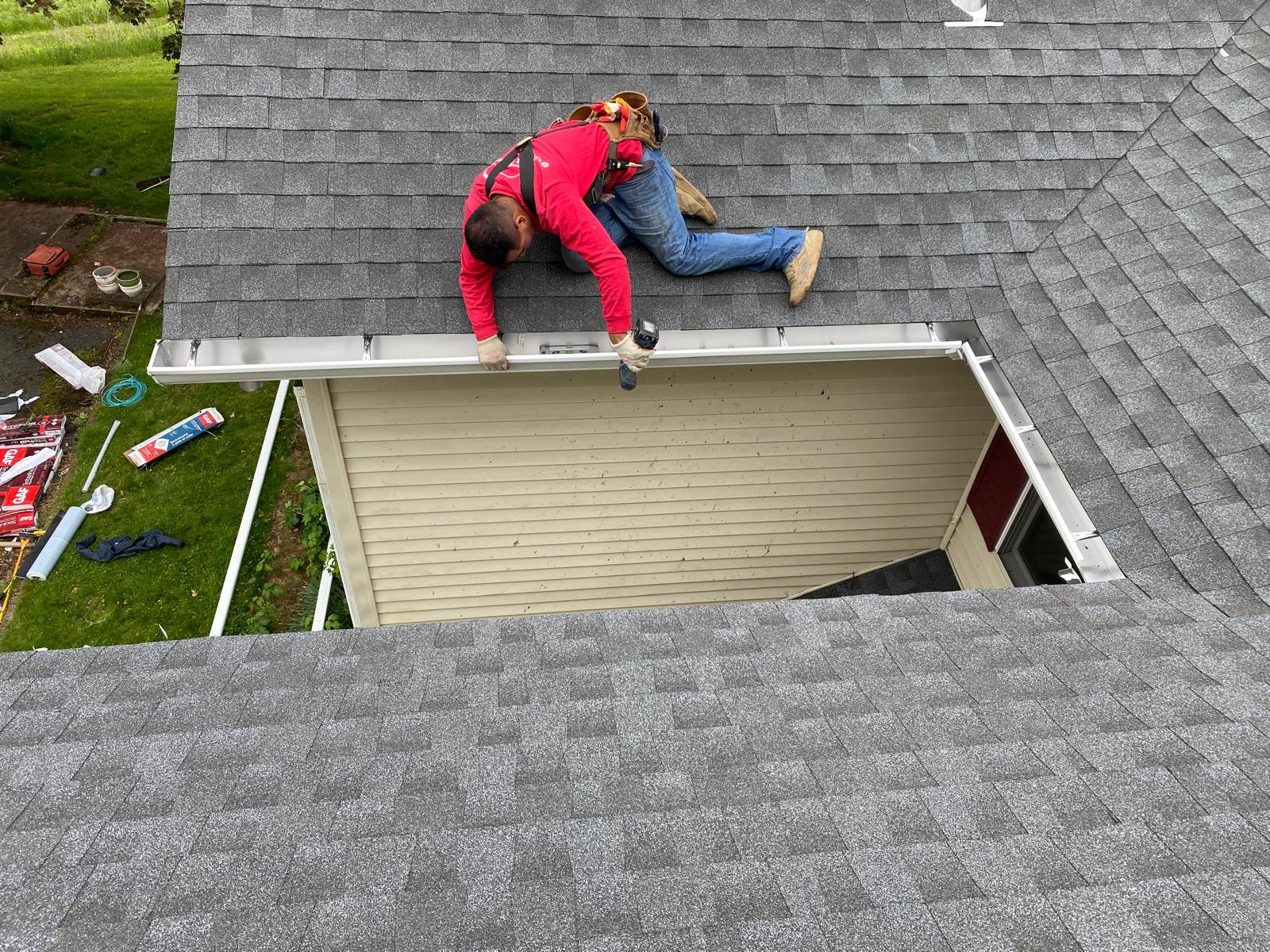
How Much Does Gutter Installation Cost Per Linear Foot?
Deluxe Construction NJ LLC provides professional seamless gutter installations, routine gutter cleaning, and repair services for homeowners in Bergen County and the surrounding northern New Jersey regions. If you are budgeting for new gutters, the most useful starting point is the price per foot, then adjusting for material, roof complexity, downspouts, removal, and any fascia repairs. This gutter pricing guide explains the numbers in plain language so you can request a realistic gutter cost estimate instead of guessing. What is the average gutter installation cost per linear foot in 2026? The average gutter installation cost per linear foot 2026 usually falls somewhere between budget vinyl or aluminum systems and premium copper or zinc systems. National cost guides show broad ranges because a straight one-story aluminum job is very different from a multi-story home with steep rooflines, custom corners, and copper materials; Angi lists many gutter installations at about $4 to $40 per linear foot, while This Old House lists a wider installed range of about $12 to $62 per linear foot for 2026 projects. (angi.com) For a practical homeowner budget, it helps to separate “basic replacement” from “custom exterior water-management work.” A simple gutter installation price may cover gutters, hangers, basic downspouts, and standard labor. A more complete project may include old gutter removal, disposal, oversized downspouts, gutter guards, fascia reinforcement, and adjustments to improve drainage around walkways, landscaping, and foundations. A realistic installation cost breakdown A good gutter installation cost per linear foot 2026 estimate should show more than a single number. Gutters are priced by length, but the final invoice reflects materials, labor, access, safety, and accessories. HomeAdvisor reports gutter replacement averages from $629 to $1,735 nationally, or around $4 to $40 per linear foot, with pricing affected by home size, gutter type, material, roof pitch, design, and location. (homeadvisor.com) Use these typical ranges as planning benchmarks, not guaranteed quotes: Material is only one part of the cost for gutter installation per linear foot. Labor can rise when installers need extra ladder work, roof-edge access is difficult, fascia boards are damaged, or the home has multiple roof sections. In northern New Jersey, where older homes, mature trees, winter freeze-thaw cycles, and heavy seasonal rain are common concerns, the best estimate should focus on drainage performance as much as appearance. Material choices shape long-term value The lowest cost of gutters is not always the best value. Vinyl may keep the starting price down, but it can be less appealing for homeowners who want a longer-lasting upgrade. Aluminum is often the balanced choice for many homes because it can deliver strong performance without the premium price of copper. HomeAdvisor’s 2026 aluminum gutter data places aluminum installation around $7 to $12 per linear foot, depending on gutter type, home size, and material quality. The same source notes that seamless aluminum generally costs more than seamed aluminum, but it reduces the number of joints where leaks commonly develop. (homeadvisor.com) Copper belongs in a different category. It costs more upfront, but homeowners may choose it for architectural character, long service life, and curb appeal. HomeAdvisor lists professional copper gutter installation at about $18 to $40 per linear foot, with style, thickness, location, and job complexity influencing the total. (homeadvisor.com) If your goal is reliable performance at a sensible gutter installation price, seamless aluminum is often worth pricing first. If your goal is a premium exterior finish, copper may be worth comparing as part of a larger roofing, siding, or exterior renovation. What changes the price per foot? The price per foot changes when the job requires more material, more time, more safety planning, or more customization. Two homes can have the same gutter length and very different totals because one may have easy one-story access while the other has steep slopes, dormers, damaged fascia, or complicated roof transitions. The most common cost drivers include: This is why a detailed gutter cost estimate matters. A single low number may look attractive, but it may not include everything needed to protect the home. Seamless gutters versus sectional gutters Seamless gutters are custom-formed for long, continuous runs along your roofline. Sectional gutters come in shorter pieces joined together. The biggest difference is the number of connection points: fewer joints usually means fewer places for leaks to start. Sectional systems can make sense for small repairs or budget-sensitive situations. However, seams are often where water begins to escape, especially after years of expansion, contraction, debris buildup, and sealant wear. Seamless gutters typically cost more upfront because they require professional measuring, cutting, and forming, but they are often the cleaner choice for homeowners who want lower leak risk and a better finished look. For gutter Installation New Jersey projects, seamless systems are especially practical when gutters must handle intense rain, leaf debris, and snowmelt. Deluxe Construction NJ LLC installs custom-fit seamless aluminum or copper gutters designed to prevent leaks and maximize water flow capacity. That custom fit helps water move away from the roof edge instead of spilling behind the gutter, soaking fascia, or pooling near the foundation. Gutter Services Provided Deluxe Construction NJ LLC takes an integrated approach to exterior water management. Gutter projects are often paired with roofing and siding jobs because all three systems work together. A roof sheds water, siding protects the walls, and gutters move runoff safely away from the structure. When these components are handled separately without coordination, problems can be missed. A new gutter may not solve overflow if the roof edge, drip edge, fascia, or downspout placement is wrong. By looking at gutters alongside roofing and siding, the team can better support proper drainage, cleaner exterior lines, and stronger protection for the home envelope. New Gutter Installation New gutter installation includes custom-fit seamless aluminum or copper gutters formed to match the home’s roofline. Seamless runs help reduce leak points, while properly sized gutters and downspouts improve water flow capacity during heavy rainfall. This is especially important for Bergen County homes with mature trees, pitched roofs, and landscaping close to
Should You Get a Second Opinion on Your Roof Installation
A roof is one of the biggest protective systems on any home or commercial property, so uncertainty around a quote, inspection, or completed installation deserves attention. A second opinion can help you understand whether you need a repair, partial replacement, or full Roof Installation before you commit to major work. For property owners in New Jersey, Deluxe Construction NJ LLC, a fully licensed and insured roofing company located at 117 5th St, Ridgefield Park, NJ 07660, offers free inspections and free estimates for all projects, including residential and commercial roof installations. When should you get a second opinion on your roof? You should get a second opinion on your roof when the diagnosis feels unclear, the price seems unusually high or unusually low, the contractor is pressuring you to decide quickly, or you are being told you need a full replacement without a clear explanation. Second opinion roofing is not about distrusting every contractor; it is about protecting your property, budget, and long-term peace of mind. A roof installation decision can involve thousands of dollars, multiple material choices, ventilation details, flashing work, warranties, and possible decking repairs. If those items are not explained in plain language, you may be comparing guesses instead of real proposals. A second opinion roof installation review gives you another trained perspective before you approve the scope. It is especially useful after a storm, before an insurance claim decision, or when different contractors give you conflicting recommendations. One contractor may see a repairable flashing issue, while another may recommend a complete tear-off. The right answer depends on the roof’s age, condition, leak history, decking, ventilation, drainage, and the quality of the existing installation. A second opinion helps separate repairs from replacement Many homeowners worry that every roofing problem leads to a full replacement. In reality, isolated damage may be solved with a targeted repair or partial replacement, while widespread deterioration usually requires a broader plan. A good contractor should explain the difference instead of jumping straight to the most expensive option. Repairs may make sense when the issue is limited to one area, such as a small leak around a vent pipe, a few missing shingles, damaged flashing, or an isolated section affected by wind. Partial replacement may be appropriate when one slope or roof section has failed faster than the rest because of sun exposure, poor drainage, or previous workmanship problems. Full Roof Installation is usually considered when damage is widespread, materials are near the end of their service life, leaks are recurring, or the roof deck and support systems need more extensive attention. For roof installation New Jersey property owners, this distinction matters because local weather can be hard on roofing systems. Snow, ice, wind-driven rain, humidity, and seasonal temperature swings can reveal weak valleys, poor flashing, inadequate ventilation, or failing underlayment. A second opinion can help determine whether the visible symptom is minor or part of a larger system failure. Warning signs that another inspection is worth it Consider getting another inspection if you notice any of these issues: These signs do not automatically mean the first contractor is wrong. They mean you need more clarity before making a decision. Why do roofing quotes differ so much? Roofing quotes often differ because contractors are not always pricing the same job. One quote may include tear-off, new underlayment, flashing replacement, ventilation upgrades, disposal, and warranty coverage, while another may include only basic shingle replacement. The lowest price is not automatically the best value, and the highest price is not automatically the most complete solution. When comparing proposals, look for the details behind the number. A roof is a layered system, not just visible shingles. The estimate should help you understand what is being removed, what is being installed, what is being reused, and what conditions might change the final scope once the old roof is opened. A clear proposal should identify the roof areas involved, the materials being used, the type of shingles or membrane, flashing work, ventilation work, cleanup, disposal, and any exclusions. It should also explain what happens if damaged decking is discovered. Without those details, you cannot fairly compare one bid to another. For homeowners searching for Roof Installation NJ services, this is where a second opinion can be valuable. Deluxe Construction NJ LLC specializes in residential and commercial roof installations and can review the roof condition independently through free inspections and free estimates for all projects. That gives property owners a clearer baseline before they approve work. Compare scope before comparing price Before choosing a contractor, ask each company to clarify: When these items are written clearly, price differences become easier to understand. You may discover that one contractor is offering a more complete installation, or that another is leaving out important system components. What should a second opinion inspection include? A useful second opinion inspection should evaluate the roof as a complete system, not just confirm or reject the first quote. The contractor should inspect visible materials, flashing, penetrations, drainage paths, ventilation, roof edges, valleys, and signs of water intrusion where accessible. The goal is to explain what is failing, why it is failing, and what choices you realistically have. For the most independent feedback, let the second contractor inspect the roof before showing them the first recommendation. This helps reduce bias. After they share their findings, you can compare both opinions and ask why the conclusions match or differ. A good second opinion should also explain consequences. If you choose repair instead of replacement, how long might that repair reasonably solve the issue? If you delay full installation, what risks should you monitor? If you replace now, which components should be upgraded so the roof performs as intended? Questions to ask during the appointment Use the second opinion to get answers you can act on: The best answers are specific, calm, and easy to understand. If the explanation sounds vague or fear-based, keep asking questions until the scope is clear. Material choices affect the right recommendation Not
Red Flags When Getting a Roof Estimate
When you’re planning a roof replacement or major roof repair, the estimate is more than a price on paper. It is the first real test of whether a contractor is organized, transparent, and prepared to protect your home or building. A clear estimate helps you understand what work will be done, which materials will be used, how the property will be protected, and what happens if unexpected issues are found after the old roofing is removed. A rushed or confusing estimate can lead to budget surprises, project delays, warranty issues, and repairs that do not solve the real problem. For homeowners and property managers comparing contractors, knowing the common red flags roof estimate shoppers should watch for can make the difference between a smooth project and an expensive headache. Below are practical roofing estimate tips and key Red Flags When Getting a Roof Estimate to help you evaluate proposals with confidence, especially if you are considering roof replacement in New Jersey, where weather, building conditions, and local property types can all affect the scope of work. Why the Roof Estimate Matters So Much A roof estimate should do more than tell you the total cost. It should explain the project. A dependable contractor uses the estimating process to inspect your roof, understand your concerns, identify visible problems, and recommend the right solution. For example, a simple leak may require targeted roof repair if the rest of the roof is in good condition. On the other hand, widespread shingle deterioration, recurring leaks, soft decking, failing flashing, or poor ventilation may point toward a full replacement. The estimate should make that reasoning clear. A strong roofing estimate usually helps answer questions such as: If an estimate leaves you with more questions than answers, that does not automatically mean the contractor is dishonest. But it does mean you should slow down, ask for clarification, and avoid signing until the details are in writing. Red Flag: The Contractor Gives a Price Without a Real Inspection One of the biggest warning signs is a contractor who gives a firm price without properly inspecting the roof. A quick glance from the driveway is rarely enough to understand the condition of a roofing system. A professional inspection may include checking visible roof surfaces, valleys, flashing, gutters, chimney areas, skylights, roof penetrations, attic ventilation, and signs of water intrusion. Depending on the property, the contractor may also look for sagging areas, damaged decking, aging underlayment, or previous poor repairs. If someone offers an unusually confident quote without asking questions or looking carefully, the estimate may be based on guesswork. Guesswork can lead to change orders later, especially if damaged wood, improper flashing, or ventilation problems are discovered after work begins. A better approach is to work with a contractor who explains what they inspected and why the recommended scope makes sense. Red Flag: The Estimate Is Vague or Only Lists a Lump Sum A vague estimate might say something like “replace roof” followed by a single total price. That is not enough detail for a major exterior project. Your estimate should clearly outline what is included. While every contractor formats proposals differently, you should be able to understand the main components of the job. A complete estimate may include: If the proposal does not specify materials, quantities, roof areas, or installation details, you cannot make a fair comparison with another bid. A lower price may simply mean that important items are missing. Red Flag: The Price Is Much Lower Than Every Other Estimate Everyone wants a fair price. However, an estimate that is dramatically lower than the others should be reviewed carefully. Sometimes the cheapest bid excludes key parts of the project, uses lower-quality materials, skips important preparation steps, or relies on unclear labor practices. A low price can also become more expensive later if the contractor adds charges for items that should have been discussed upfront. For example, disposal, flashing, permits, wood replacement, or gutter protection may not be included. That does not mean the highest estimate is always the best. The goal is not to choose the most expensive contractor. The goal is to understand the value behind the number. Ask what is included, what is excluded, and how unexpected conditions are handled. When comparing roof replacement nj estimates, look for the proposal that gives you the clearest scope, strongest communication, appropriate materials, and a realistic price for the work described. Red Flag: High-Pressure Sales Tactics A roof is a major investment. You should not feel pressured to sign immediately, especially if you still have questions. Be cautious if a contractor says the price is only good “right now,” discourages you from getting other estimates, pushes financing before explaining the work, or insists that your roof is in urgent danger without showing evidence. Emergency roof repair situations do happen, but even then, a reputable contractor should explain the immediate concern and the recommended next step. Pressure tactics can make homeowners rush into agreements they do not fully understand. A reliable contractor gives you room to review the estimate, compare options, and ask questions. Red Flag: No Written Warranty Details Roofing warranties can be confusing because there may be both manufacturer warranties and contractor workmanship warranties. The estimate should make clear what warranty coverage is being offered and what the homeowner needs to do to maintain eligibility. A vague promise such as “you’re covered” is not enough. Ask for written details. Important warranty questions include: If a contractor avoids warranty questions or refuses to put warranty terms in writing, that is a serious red flag. Red Flag: Missing Insurance, License, or Business Information Before hiring any exterior contractor, ask for proof of insurance and basic business information. Roofing work involves ladders, tools, debris, and potential property risks. Proper insurance helps protect both the contractor and the property owner. You should also feel comfortable confirming that the company is established, reachable, and operating under a consistent business name. A professional estimate should include company contact information and