
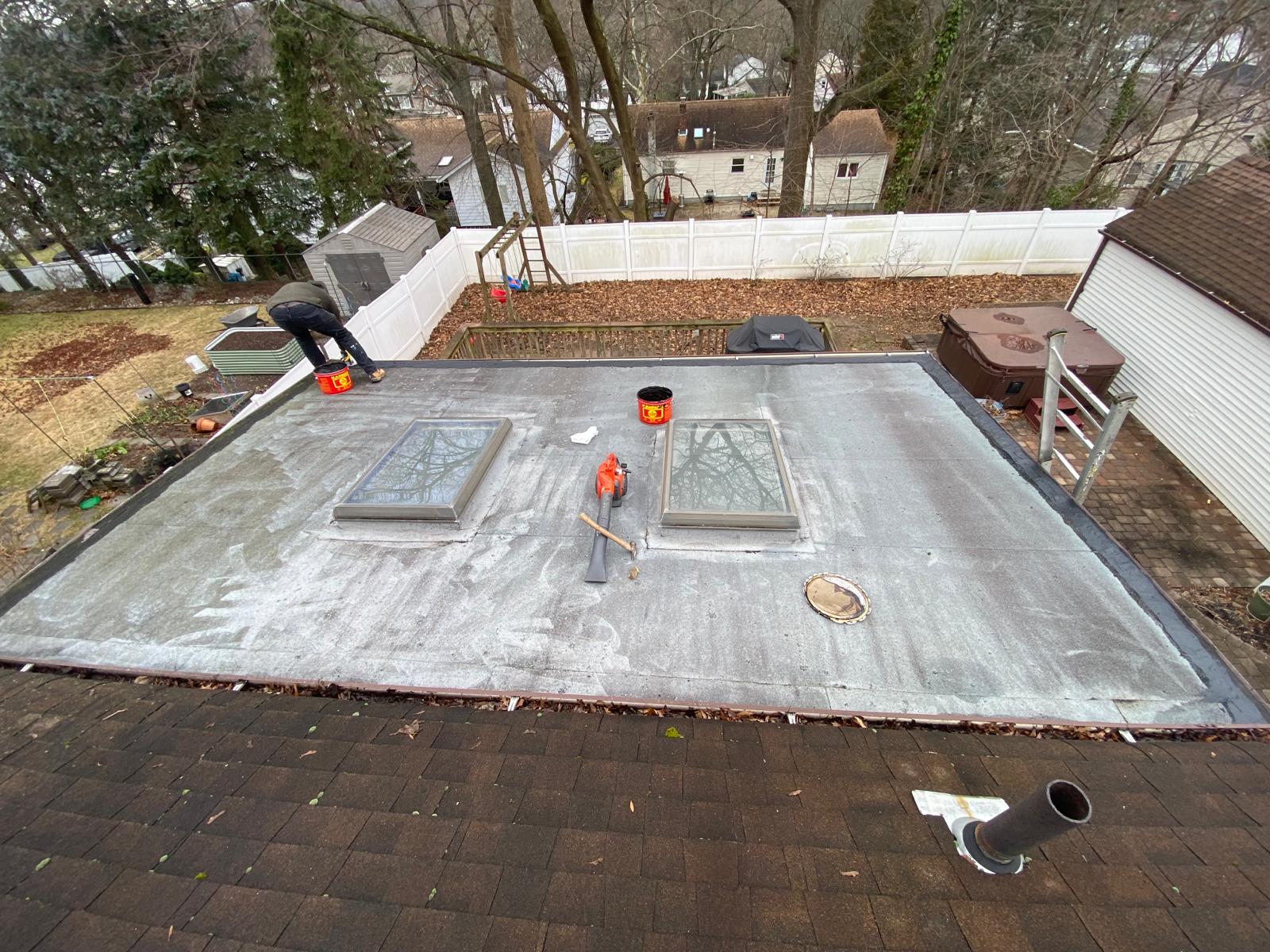
Most of us look at a snow-covered building and see a picturesque winter wonderland. Structural engineers, however, see thousands of pounds of invisible pressure pushing down from above. According to building experts, your roof constantly supports the weight of its own materials—known as the “dead load”—but heavy winter storms introduce a massive, unpredictable “live load” of dense snow that can test a building’s limits.
Unlike sloped residential roofs that easily shed snow from their shingles, commercial systems face a much harsher reality. Flat roofs aren’t actually perfectly level; they rely on a slight pitch to direct water across a continuous, rubber-like membrane toward internal drains. In practice, freezing weather turns this design into a giant shallow bowl that traps heavy ice, quickly transforming a minor winter storm into a major structural liability.
Recognizing how snow and ice impact flat commercial roofs serves as your best defense against unexpected financial disaster. By adopting a logic-based approach to winter roof maintenance, you can spot hidden stress signs early. Ultimately, proactive commercial roof care simply demands knowing when that seasonal white blanket crosses the line from a temporary nuisance to an outright emergency.
Why Your ‘Flat’ Roof Isn’t Actually Flat—And How Winter Breaks the System
Despite the name, commercial “flat” roofs actually have a slight, intentional tilt. A critical 1/4-inch slope per foot is required to guide melting snow toward an exit, acting much like a gently tilted shower floor. This subtle pitch prevents “ponding water”—pools of moisture that rapidly degrade roofing seams and invite leaks.
Properly managing moisture escape routes serves as your first line of defense against structural damage. Typical commercial flat roof drainage systems for winter rely on three main exit routes:
- Scuppers: Metal-lined openings along the outer parapet walls that funnel water away from the building’s exterior.
- Internal Drains: Bowl-like catchments placed in the roof’s center that pipe water safely down through the building’s interior.
- Gutters: Traditional exterior troughs attached to the lower edges to collect general runoff.
The worst ice accumulation effects occur when a trickle of daytime melt freezes solid overnight right across these specific exits. Once an ice dam forms, trapped water backs up into a massive, expanding frozen pool. Consequently, clearing blocked scuppers and internal drains before a freeze is vital to your roof’s survival. When trapped water turns to solid ice, it fundamentally alters structural stress, bringing us to the “shelf” analogy and calculating the massive weight of “invisible” snow.

The ‘Shelf’ Analogy: Calculating the Massive Weight of ‘Invisible’ Snow
Looking up at a winter snowfall, it is easy to underestimate the crushing force resting above your ceiling. A foot of dry snow adds roughly three pounds per square foot (PSF) to your building, but wet snow easily doubles that burden. More alarming is the snow-to-ice weight ratio: just one inch of solid ice weighs the same as a foot of fresh snow, rapidly pushing older structures toward their maximum commercial roof snow load capacity.
Think of your roof frame like a sturdy wooden bookshelf. It holds a row of heavy books effortlessly, but if you completely soak those books in water, the wood eventually sags in the middle. Engineers call this downward bending “deflection,” which is a natural response to heavy weight. On a commercial flat roof, however, this subtle bowing triggers a dangerous chain reaction.
As the frame sags, it forms a wide depression that traps even more freezing rain and meltwater, creating a self-feeding cycle known as the “bowl effect.” This concentrated, escalating burden severely threatens the structural integrity of commercial roofing under ice. If left unmanaged by professionals, this localized stress becomes a primary driver of sudden commercial roof collapses from excessive weight.
Beyond these massive structural threats, trapped freezing water launches a quieter attack on your building’s outer skin. As heavy moisture freezes and thaws overnight, it violently forces the protective membrane to stretch. This constant temperature-driven expansion leads directly to our next unseen threat: thermal shock and the “soda can” effect that causes your roof seams to split.

Thermal Shock and the ‘Soda Can’ Effect: Why Your Roof Seams Split
We’ve all seen a forgotten soda can burst in the freezer. That same physics threatens your building when trapped moisture turns to ice. Daytime sun melts snow into microscopic surface cracks, while nighttime temperatures cause that water to freeze and forcefully expand. This extreme temperature shift—called “thermal shock”—is incredibly destructive when dealing with ponding water freezing on TPO membranes. Instead of sitting harmlessly on the surface, the expanding ice acts as a physical wedge prying your waterproof seams apart.
When this ice finally thaws, it leaves behind permanently stretched seams and soaked flat roof insulation beneath the surface. These newly widened gaps create direct, immediate paths for meltwater to enter your building, explaining why sudden roof leaks usually erupt on the first warm day rather than during the actual blizzard.
Catching this invisible damage early prevents minor material stretching from becoming an expensive interior repair. To accurately assess the impact of freeze-thaw cycles on roof flashings, monitor your property for these four exterior clues before moving inside to check for deeper structural strain:
- Sudden ceiling water stains appearing during a sunny winter thaw.
- Visible material wrinkling along the exterior building roofline.
- Icicles forming unexpectedly directly under metal wall flashings.
- Unexplained drafts or cold air leaks near exterior walls.
The ‘Sticking Door’ Test: 5 Early Warning Signs of Snow-Load Damage
Have you noticed interior doors sticking lately? A door that suddenly refuses to latch is often your building’s first cry for help under massive winter weight. When a flat roof holds thousands of pounds of snow, support beams subtly bow downward—a process called deflection. This pressure transfers directly into your walls, warping door frames far below the roofline.
Learning how to identify roof snow accumulation damage before a collapse means trusting your senses. You can spot these five structural warning signs without ever climbing a ladder:
- The “Sticking Door” test: Interior doors or windows suddenly jamming.
- Audible structural stress: Unexplained popping, creaking, or groaning echoing overhead.
- Deflection cues: A noticeable sag in suspended ceilings or drywall.
- Visual ponding: Heavy ice bowls visible from higher neighboring windows.
- Interior dampness: Wall stains pointing to signs of winter moisture infiltration.
Ignoring these subtle alarms often guarantees the need for expensive emergency roof repairs after heavy snowfall. Once a building audibly groans under extreme strain, the window for safe intervention shrinks quickly. The immediate next step isn’t grabbing a shovel yourself, but evaluating safe mitigation options like manual removal or chemical de-icing.
Professional Prevention: Manual Removal vs. Chemical De-Icing
When a building shows stress, the instinct is to eliminate the weight immediately. However, one of the most crucial snow removal tips is hiring crews trained in professional snow raking rather than sending staff onto a slippery roof with metal shovels. Flat roof membranes are easily punctured by sharp edges hidden beneath the snow. Professionals use specialized plastic tools, deliberately leaving a thin protective layer of snow behind to keep the waterproof seal intact.
Weighing manual snow removal against chemical de-icing requires knowing your exact roof material. Standard rock salt clears concrete sidewalks easily, but tossing it onto a rubber EPDM or plastic TPO membrane can degrade the surface and void your warranty. Safe treatments demand strict chemical compatibility—typically utilizing calcium chloride or specialized non-corrosive liquids—to melt the freeze without eating through your roof’s primary line of defense.
Proactive property managers often integrate automated heat trace systems to maintain clear drainage pathways. These heating cables gently warm the areas around scuppers, serving as essential ice dam prevention by guaranteeing melted water has a reliable exit route. Furthermore, installing snow guards on low slope roofs helps control how residual ice shifts during a thaw, protecting lower gutters and pedestrian walkways from sudden sliding.
Ultimately, choosing the right intervention comes down to simple cost-benefit logic. Paying for safe, professional clearing is a tiny fraction of the cost of emergency structural repairs. Properly deploying these protective tools naturally prepares you to establish a comprehensive strategy for roof longevity.
Your Winter Resilience Roadmap: A Strategy for Roof Longevity
You no longer have to look at a snow-covered building and wonder if the structure is silently struggling under invisible weight. Because the freeze-thaw cycle exploits minor seam vulnerabilities, staying ahead of the storm ensures long-term ROI by protecting the roof membrane before costly damage occurs.
Transform this knowledge into a repeatable commercial roof winter maintenance checklist with three essential steps:
- Inspect: Have a professional check your drainage paths before freezing temperatures hit, which is vital for preventing ice dams on flat roofs.
- Clear: Hire qualified experts to safely remove heavy, wet snow after major storms—never climb a slippery commercial roof yourself.
- Monitor: Watch for interior warning signs like suddenly sticking doors or drywall cracks, so you know exactly when to call a structural engineer to assess potential deflection.
Winter weather will always test your building, but managing it is no longer a guessing game. Whether you are maintaining an older membrane or upgrading to the best commercial roofing materials for cold climates, you now have the practical insight to secure your property. Treat your roof as an active, dynamic system to maintain its structural integrity all season long.