Imagine opening your mailbox to find a formal letter from your local township, stating that your home’s roof is in violation of municipal codes and must be replaced. For many homeowners, this scenario induces immediate panic. You might wonder: Can a city demand a roof replacement in New Jersey?
The short answer is yes. Under specific circumstances, usually related to severe safety hazards or extreme blight, your local government absolutely has the legal authority to force you to fix or entirely replace your roof.
Understanding how and why a municipality can mandate a home repair is essential for protecting your property, your wallet, and your peace of mind. Let’s dive into the legalities, the process, and what you should do if you find yourself facing a city-mandated roof replacement.

Understanding Municipal Power and Property Codes
To understand why a city can demand repairs on privately owned property, you first need to understand the hierarchy of building and maintenance codes.
In New Jersey, local governments are responsible for ensuring that all buildings within their borders are safe for habitation and do not pose a threat to neighbors or the public. This is overseen through New Jersey property maintenance standards, which dictate the minimum conditions a property must meet to be considered safe and habitable.
The Role of Code Enforcement
The broad municipal code enforcement officer authority allows local officials to inspect properties—often triggered by neighbor complaints, routine neighborhood surveys, or visible damage from the street. If an officer determines your roof is severely deteriorating, they can issue a citation.
While there is sometimes confusion between municipal vs state building codes, the breakdown is generally straightforward: the state sets the standard (like the NJ Uniform Construction Code), but your local municipality enforces property maintenance and dictates when an existing structure has fallen below those legal thresholds.
When Does a Repair Become a Mandated Replacement?
A code enforcement officer won’t demand a brand-new roof just because your shingles look a bit faded. The city usually steps in only when there are significant safety concerns.
Structural Safety and Imminent Hazards
If your roof is visibly sagging, missing large sections of shingles after a storm, or actively leaking to the point of structural decay, the city will intervene based on structural integrity public safety standards.
If a building official determines the roof is in danger of collapsing, they may issue an imminent hazard building designation. This is the most severe level of violation. The unsafe structure notice consequences that follow can include immediate eviction of the residents (condemning the property) until the structural issues are fully resolved.
Legal Criteria for Replacement
You might be wondering if you can simply patch the roof to satisfy the city. The roof repair versus replacement legal criteria usually depend on the extent of the damage. According to most building codes, if more than 25% to 30% of the roof’s surface area is damaged or needs to be removed to fix the underlying structure, a patch job is no longer legally permitted. You will be required to pursue a full roof replacement in New Jersey.
The Inspection and Permitting Process
Once you receive a notice from the city, the clock starts ticking. Navigating the municipal bureaucracy requires specific steps.
1. Professional Assessment
The city’s notice will likely mandate a local ordinance roof inspection to formally document the extent of the damage. You will need to hire a licensed professional for a thorough roof inspection nj to assess the decking, underlayment, and structural supports.
2. Obtaining the Right Permits
You cannot simply start tearing off shingles. You must navigate the re-roofing permit process NJ. Your contractor will need to submit plans to the township’s building department to prove NJ Uniform Construction Code compliance.
3. Emergency Situations
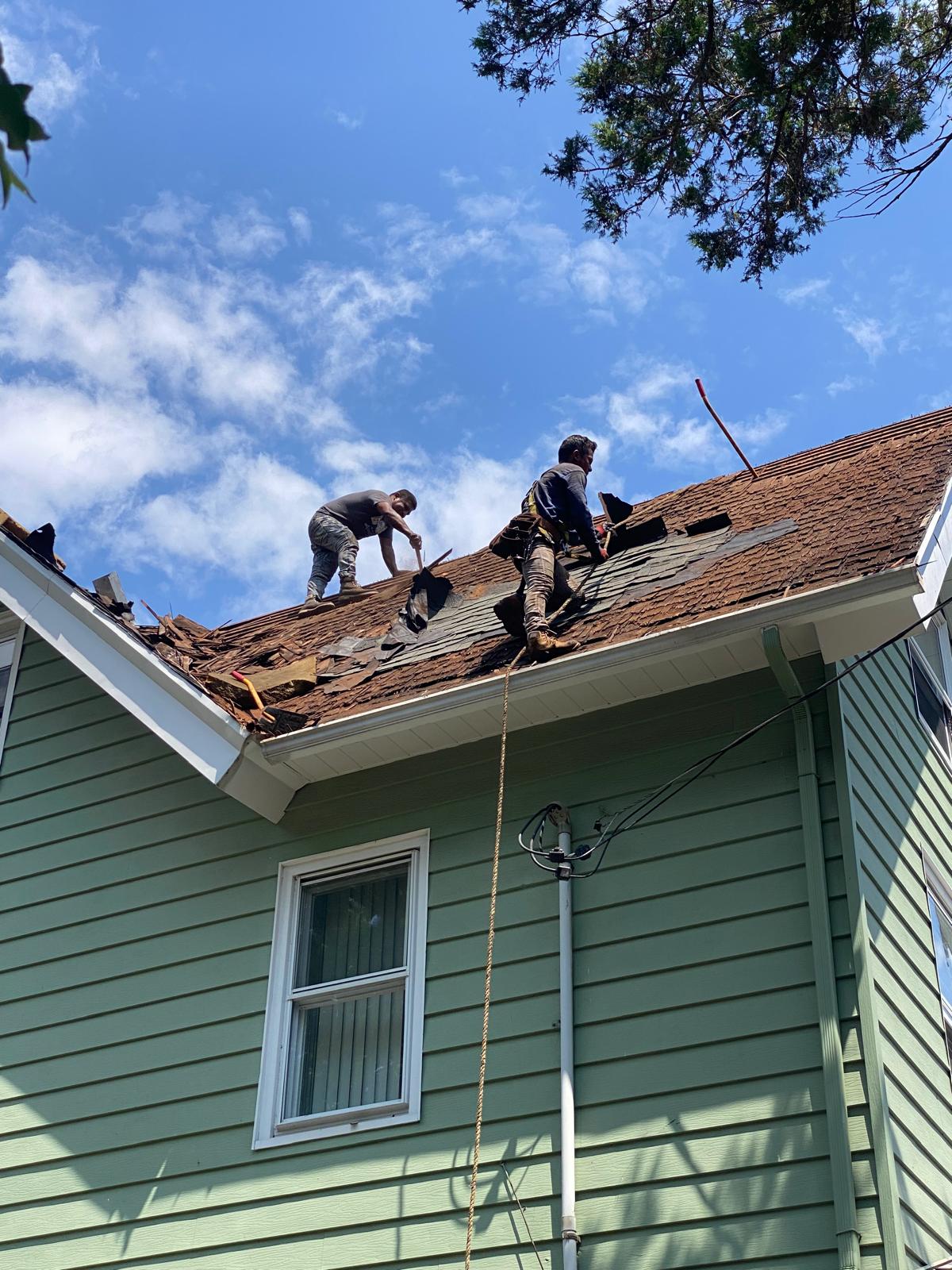
If your roof was destroyed by a severe storm or tree fall, and you have been given an imminent hazard notice, the standard permit waiting period could leave your home exposed. In these cases, your contractor can apply for an emergency construction permit NJ, which expedites the paperwork so that a full roof replacement nj can begin almost immediately to protect the structure.
Special Circumstances: Historic Districts
If you live in one of New Jersey’s many historic towns—such as Cape May, Morristown, or parts of Montclair—you have an extra layer of bureaucracy to navigate.
Homes located in historic districts are subject to strict historical society roofing guidelines NJ. If the city mandates a roof replacement, you cannot simply throw up the cheapest materials available. The historic commission may require you to use specific materials, such as slate, wood shake, or architecturally approved simulated shingles, to maintain the historical aesthetic of the neighborhood.

What to Do If You Receive a Municipal Order
Ignoring a letter from code enforcement is the worst thing you can do. The fines for roofing violations NJ can accumulate daily, quickly turning into thousands of dollars in liens against your property.
Here is an actionable checklist if you receive a mandate:
- Read the notice carefully: Note the exact code violations and the deadline for compliance.
- Contact the code enforcement officer: Open a line of communication. Demonstrating that you are actively working to fix the issue can sometimes buy you an extension on the deadline.
- Consider an appeal: If you genuinely believe the city has made an error and your roof is structurally sound, you have the right to challenge it. Appealing a municipal repair order usually involves hiring an independent structural engineer to prove your roof meets local safety standards.
- Hire a professional: Reach out to reputable roofing contractors nj who have experience dealing with municipal code violations.
Financial Relief and Insurance Coverage
A forced roof replacement is an unexpected and massive expense. Understanding the new jersey roof replacement cost is crucial. While the roof replacement cost new jersey homeowners face varies based on the size of the home, pitch of the roof, and chosen materials, it generally ranges from $7,000 to over $15,000.
Does Insurance Cover Mandated Replacements?
If your roof’s deterioration was caused by a covered peril (like a sudden windstorm or fallen tree), your standard homeowner’s insurance should cover the new jersey roof replacement.
However, if the city demands upgrades to meet current building codes that didn’t exist when your home was built, you will need specific home insurance coverage for mandated repairs, known as “Ordinance or Law Coverage.” Check your policy to see if you have this rider; it can save you thousands in unexpected code-upgrade costs.
State and Local Assistance Programs
If the replacement is mandated due to age and wear and tear, insurance will not cover it. However, low-income homeowners, veterans, or senior citizens might qualify for a new jersey roof replacement program. Programs like the Weatherization Assistance Program (WAP) or local county-level housing rehabilitation grants can help cover the costs of bringing a home up to code.
Hiring the Right Professionals for the Job
When the city is breathing down your neck, you don’t have time to mess around with unlicensed handymen. You need top-tier new jersey roofers who understand the legal gravity of your situation.

Look for contractors who specialize in comprehensive nj roofing solutions. Whether you need a localized roof repair nj (if the city allows it) or a complete roof installation nj, your contractor must be licensed, fully insured, and well-versed in local permit laws.
When selecting a material for your roof replacement new jersey, consider longevity and cost. For a standard asphalt shingle roof replacement new jersey homeowners typically find it provides the best balance of durability, aesthetic appeal, and affordability, easily satisfying standard municipal codes.
Ultimately, high-quality new jersey roofing isn’t just about keeping the rain out; it’s about maintaining the legal and structural integrity of your most valuable asset.
Conclusion
So, can a city demand a roof replacement in New Jersey? Absolutely. Through property maintenance codes and safety regulations, local governments have the authority to ensure all homes are structurally sound.
Receiving a mandate to replace your roof is undeniably stressful, but it doesn’t have to be a disaster. By understanding municipal building codes, moving quickly to secure the right permits, communicating with local officials, and hiring experienced roofing contractors nj, you can navigate the process smoothly. Taking prompt action not only keeps you in the good graces of the law but also ensures your home remains a safe, secure haven for years to come.