
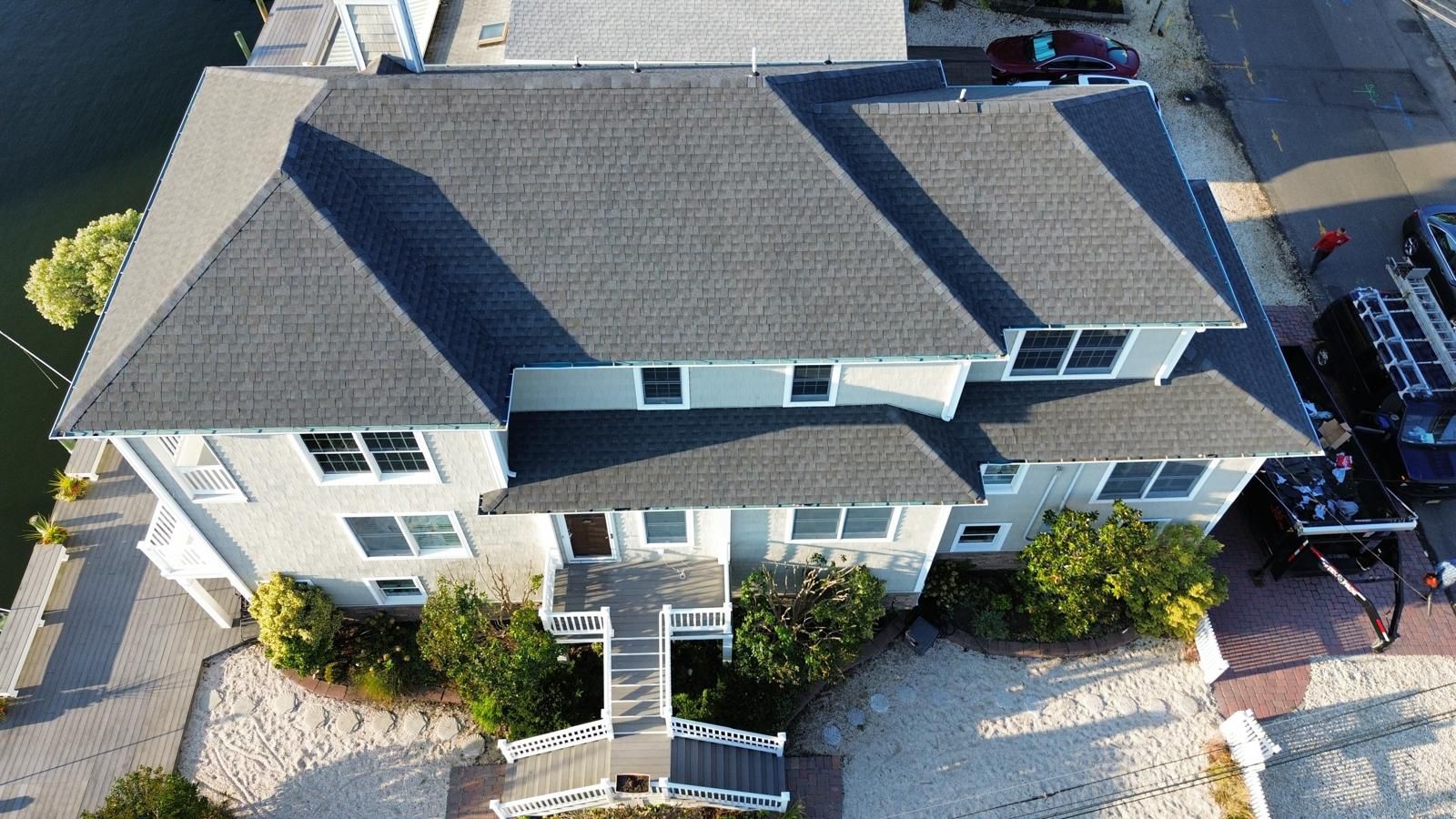
The most reliable roofing materials for roof installation, ranked by proven service life, are natural slate (75–150+ years), clay and concrete tile (50–100 years), standing seam metal (40–70 years), synthetic composite shingles (40–50 years), and architectural asphalt shingles (20–30 years). For flat and low-slope sections, EPDM rubber and TPO membrane are the reliable choices, with EPDM holding the longest documented field record.
For most New Jersey homes, the honest answer is narrower than that list. Slate and tile are magnificent and almost never appropriate for a typical NJ frame house without structural work. The realistic reliability decision here comes down to three options: architectural asphalt shingles with the right ratings, standing seam metal, or synthetic slate — plus a membrane for any flat section.
And here is the part most articles skip: the material is not what fails. In 20+ years of exterior work across Bergen, Passaic, Morris and Monmouth counties, the roofs we tear off early almost never failed because someone picked the wrong shingle. They failed at the eave, the valley, the chimney, or in the attic. Material choice sets the ceiling on how long your roof can last. Installation and ventilation decide whether you ever reach it.
Reliability Is a System Property, Not a Shingle Property
A roof is an assembly. When any one layer is wrong, the rated lifespan of the covering becomes irrelevant.
The assembly that has to be right:
- Deck — solid, dry sheathing with no delamination or rot. Code requires the deck to carry the new covering plus snow and wind loads, and any water-stained or spongy sheathing has to be replaced, not covered.
- Ice barrier — a self-adhering polymer-modified bitumen membrane at the eaves. In New Jersey this is not optional in most of the state (more on this below).
- Underlayment — synthetic or felt across the remaining field, lapped correctly.
- Flashing — step flashing at walls, counterflashing at chimneys, valley metal. This is where the overwhelming majority of leaks we’re called out to actually originate.
- Ventilation — balanced intake at the soffit and exhaust at the ridge. The IRC requires net free ventilating area of at least 1/150 of the vented attic space, reducible to 1/300 when intake and exhaust are properly balanced.
- Fastening — correct nail count, correct placement in the nail zone, correct penetration depth.
Field observation: Nail placement is the single most common quality failure we find on premature shingle blow-offs. A shingle nailed above the reinforced nailing strip has essentially no wind rating, no matter what the wrapper says. It will hold fine — until the first 55 mph nor’easter gust.
What New Jersey Weather Actually Does to a Roof
New Jersey is a genuinely hard climate for roofing, and it is hard in more than one direction at once.
Freeze-thaw cycling. Northern NJ runs through dozens of freeze-thaw cycles each winter. Water gets into a hairline crack in a mortar crown or under a lifted shingle tab, freezes, expands, and widens the gap. Next cycle, it goes deeper. This is why chimney crowns and masonry parapets fail here faster than the roof field does, and why chimney repair is so often bundled into a roof replacement.
Ice damming. Warm air escapes a poorly ventilated attic, melts snow mid-slope, and the meltwater refreezes at the cold overhang. The dam backs water uphill, under the shingles. Shingles shed water; they do not hold back standing water. Only an ice barrier does.
Nor’easters and wind-driven rain. Sustained wind with rain driven sideways is the NJ signature event, not the single hurricane. Wind-driven rain exploits ridge caps, hip laps and headwall flashing.
Heavy wet snow. Coastal-influenced snow here is dense. Snow load matters for low-slope sections and for anyone considering tile or slate.
Salt exposure at the shore. On barrier island and near-shore work — our Broad Ave, Mantoloking (08738) roof installation is a good example — salt aerosol attacks fasteners and unprotected metal. Coastal jobs need stainless or properly coated fasteners and aluminum rather than bare steel accessories. Inland Bergen County jobs do not.
The code language that matters in NJ
The New Jersey edition of the International Residential Code (Section R905.1.2) requires an ice barrier for asphalt shingles, metal roof shingles, mineral-surfaced roll roofing, slate and slate-type shingles, and wood shingles and shakes in areas where the average daily January temperature is 25°F or less. The barrier must be at least two cemented layers of underlayment or a self-adhering polymer-modified bitumen sheet, extending from the eave edge to a point at least 24 inches inside the exterior wall line.
Two practical consequences homeowners rarely hear:
- On a low-pitch roof or a deep overhang, 24 inches inside the wall line means more than one course of ice barrier. One 3-foot roll at the edge is not automatically compliant.
- When you re-roof, the new installation must meet current code for underlayment, ice barriers, flashing and ventilation — not the code in force when the house was built. A 1980s roof with no ice barrier does not grandfather in a 2026 replacement.
The Most Reliable Roofing Materials, Ranked
1. Natural Slate — 75 to 150+ years
Quarried stone, installed one tile at a time. Nothing else on the market has slate’s track record; functioning slate roofs on 19th-century NJ housing stock are not rare.
- Why it’s reliable: Stone does not degrade under UV. Class A fire. Excellent freeze-thaw resistance when the slate grade is right.
- The catch: Weight. Slate typically runs roughly 800–1,500 lbs per roofing square (100 sq ft). A standard frame house is not built for that. Retro-framing is expensive and sometimes impractical.
- The other catch: Slate’s weak point is the fastener and the flashing, not the stone. A slate roof gets its second century through copper flashing and periodic slate replacement, not by being left alone.
- Best for: Historic homes in Montclair, Ridgewood, Summit and similar, already framed for it.
2. Clay and Concrete Tile — 50 to 100 years
Clay tile is fired, essentially colourfast, and the longer-lived of the two. Concrete tile is cheaper and heavier, and can absorb more moisture — which in a freeze-thaw climate matters. If you go tile in New Jersey, specify a tile rated for severe weathering exposure, not a Sun Belt product.
- Weight: roughly 600–1,200 lbs per square. Structural review required.
- NJ note: Tile is far more common in warm, dry climates for a reason. It works here, but the underlayment beneath it becomes the real waterproofing layer, and underlayment does not last 80 years. Plan for an underlayment replacement mid-life.
3. Standing Seam Metal — 40 to 70 years
For most New Jersey homeowners who want a genuinely long-life roof without structural work, this is the top realistic answer.
- Why it’s reliable: The fasteners are concealed under the seam, so there are no exposed gasketed screws to dry out and leak at year 15. Panels are continuous from ridge to eave, so there are no horizontal laps for wind-driven rain to exploit. Snow and ice slide rather than sit.
- Weight: about 50–150 lbs per square — often lighter than the asphalt roof it replaces.
- Watch for: Thermal movement. Panels expand and contract; clips must allow it. Rigid attachment causes oil-canning and fastener fatigue. Also budget for snow retention above entries and walkways — a metal roof will drop its entire snow load at once.
- Not the same thing: Exposed-fastener corrugated metal is a different, cheaper product with a much shorter reliable life because every screw gasket is a future leak.
4. Synthetic / Composite Shingles — 40 to 50 years
Engineered polymer or recycled-rubber shingles moulded to look like slate or cedar shake. The most underrated option in this market.
- Why it’s reliable: Many carry UL 2218 Class 4 impact resistance — the highest rating, meaning the product resisted a 2-inch steel ball dropped from 20 feet — combined with Class A fire and high wind ratings.
- Weight: comparable to a heavy architectural shingle, so no structural upgrade needed.
- Best for: Anyone who wants the slate look on a house that cannot carry slate, or anyone in a hail-exposed pocket who wants the insurance conversation to go well.
5. Architectural Asphalt Shingles — 20 to 30 years
The most-installed residential covering in America, and the right answer for the majority of NJ homes — provided you buy on ratings, not on marketing.
Three numbers should appear on the spec sheet:
| Standard | What it tests | Look for |
|---|---|---|
| ASTM D7158 | Wind uplift resistance | Class H (the highest class; Class D and G are lower tiers) |
| UL 2218 | Hail/impact resistance | Class 4 (highest of four classes) |
| UL 790 / ASTM E108 | Fire | Class A |
Architectural vs 3-tab. Architectural (laminated, dimensional) shingles are multi-layer, heavier, stiffer, and carry a stronger sealant bond. 3-tab shingles are single-layer with cut-out tabs. In a wind-driven-rain climate, 3-tab is a false economy: you save a few thousand dollars on a roof that realistically returns 15–18 years instead of 25–30, and you’ll pay for the second tear-off.
Professional judgement, not a fact claim: We won’t install 3-tab on a full replacement in northern NJ unless a homeowner insists and understands the trade-off. The labour cost is nearly identical; only the material is cheaper. The math almost never works.
Deluxe Construction NJ is a GAF-certified contractor and also installs CertainTeed, Johns Manville, TAMKO and Rubber Cover systems — which means we are not locked into recommending a single manufacturer’s product regardless of the roof in front of us.
6. Flat and Low-Slope Sections: EPDM, TPO and Modified Bitumen
Any roof at 2:12 pitch or less needs a membrane, not shingles. Many NJ homes have both — a shingled main roof plus a flat porch, dormer, extension or garage section. That transition is a common leak point.
EPDM (rubber) — black synthetic rubber sheet with taped or adhered seams. The EPDM Roofing Association’s 2025 survey of 569 roofing professionals reported expected service lives from about 25 years to more than 40, depending on membrane thickness and attachment method. It has the longest documented field record in low-slope roofing and stays flexible in cold weather — which is exactly what a New Jersey winter asks of it. Its weaknesses are puncture resistance and seam adhesion quality.
TPO — white, heat-welded thermoplastic. Typical service life 20–25 years, with newer formulations performing better than the early ones. The heat-welded seam is stronger than the membrane itself, and the reflective surface reduces summer cooling load. It’s the better pick for a flat commercial roof with significant air conditioning demand.
Modified bitumen — multi-ply, torch- or self-adhered. Excellent puncture resistance for roofs that get walked on (rooftop HVAC access), shorter lifespan than EPDM.
Our default for a residential NJ flat section: 60-mil EPDM. Cold flexibility and the long field record outweigh TPO’s reflectivity on a 300-square-foot porch roof that contributes almost nothing to the cooling bill.
Comparison Table: Reliability at a Glance
| Material | Expected life | Approx. weight (lbs/square) | Wind/impact ceiling | Structural upgrade likely? | NJ freeze-thaw fit |
|---|---|---|---|---|---|
| Natural slate | 75–150+ yrs | 800–1,500 | Excellent | Yes | Excellent |
| Clay tile | 50–100 yrs | 600–1,200 | Very good | Yes | Good (specify severe-weathering grade) |
| Concrete tile | 40–75 yrs | 900–1,200 | Very good | Yes | Fair |
| Standing seam metal | 40–70 yrs | 50–150 | Excellent | No | Excellent |
| Synthetic/composite | 40–50 yrs | 250–400 | Class 4 available | No | Excellent |
| Architectural asphalt | 20–30 yrs | 240–430 | Class H / Class 4 available | No | Good |
| 3-tab asphalt | 15–18 yrs | 200–240 | Limited | No | Weak |
| EPDM (flat) | 25–40 yrs | n/a | Good (low puncture) | No | Excellent |
| TPO (flat) | 20–25 yrs | n/a | Good | No | Good |
Weights are typical industry ranges for planning purposes. Any switch to a heavier covering requires verification of the existing framing.
How to Choose: A Four-Question Filter
1. What is the roof slope? Under 2:12 → membrane, full stop. 2:12 to 4:12 → shingles permitted but with doubled underlayment. Over 4:12 → everything is on the table.
2. What can the structure carry? If you want slate or tile, this question gets answered by an engineer before anything else. If the answer is “standard frame,” your long-life options are standing seam metal and synthetic composite.
3. How long will you own the house? Selling within 7 years? A Class H architectural shingle roof is the right financial decision; you will not recover a metal roof premium. Staying 25+ years, or it’s a family home? Metal or synthetic is cheaper per year of service and you never do a second tear-off.
4. What’s your specific exposure? Heavy tree cover → prioritise Class 4 impact resistance and plan on gutter maintenance. Coastal → corrosion-resistant fasteners, aluminum accessories. Exposed ridge-top lot → Class H wind rating and enhanced nailing pattern. Large unshaded roof plane facing south → reflective or lighter-coloured product.
Common Mistakes We See on New Jersey Roofs
- Layering over an old roof to save money. Code limits the number of layers, and covering a failing roof hides the deck rot underneath. You will pay for it later at a worse price.
- Ice barrier stopping short of the wall line. Meets the eye, fails the code, and fails in February.
- Reusing old flashing. Step flashing is cheap. A chimney or sidewall leak found two winters later is not.
- Unbalanced attic ventilation. Ridge vent installed with blocked or missing soffit intake is one of the most common causes of shingles that age out ten years early.
- Buying on warranty length rather than ratings. A 50-year warranty on a shingle with a mid-tier wind class is a marketing document, not a performance document. Read the ASTM and UL classes.
- Ignoring the flat section. The shingle roof gets replaced; the 20-year-old porch membrane is left alone; the leak appears anyway.
What Reliable Roofing Costs in New Jersey
Installed cost varies with roof complexity, pitch, number of penetrations, tear-off layers, deck repair and access — which is why any number published online is a planning range, not a quote.
EXPERT INPUT OPPORTUNITY: Replace the ranges below with Deluxe Construction NJ’s actual 2026 installed price bands before publishing, and add average job value by material from the last 12 months.
As a rough planning frame, asphalt sits at the bottom of the range, synthetic and metal roughly two to three times higher per square foot, and natural slate several times higher again. The more useful calculation is cost per year of service: a $14,000 architectural shingle roof at 25 years costs about $560/year. A $34,000 standing seam roof at 55 years costs about $620/year — and skips one full tear-off, one round of disposal fees, and one week of disruption. The gap is far narrower than the sticker price suggests.
When to Bring in a Professional
Material selection is genuinely the easy part. Call a contractor when you need to know:
- Whether your deck and framing can carry the material you want
- Whether your existing ventilation is balanced, and what it would take to fix it
- Whether you have one repairable problem or a roof at end of life
That last question is where most homeowners get pushed in the wrong direction. Roof repairs and maintenance are not high-margin work, so the incentive across the industry runs toward replacement. Our approach is the opposite: a documented roof inspection first, every viable roof repair option exhausted second, and a full roof installation recommended only when the roof has genuinely reached the end of its service life.
If you’re already collecting quotes, it’s worth reading the red flags to watch for in a roof estimate before you sign anything.
Frequently Asked Questions
Which roofing material lasts the longest? Natural slate, at 75 to 150+ years. Among materials a standard-framed New Jersey home can actually carry without structural work, standing seam metal lasts longest at 40 to 70 years.
What is the most durable roofing material for a house? Slate is the most durable by material science. For practical durability — resistance to wind, ice, impact and time without structural upgrades — standing seam metal and Class 4 synthetic composite shingles are the strongest choices.
What type of roof is best for New Jersey weather? Standing seam metal handles the full NJ range best: it sheds snow and ice, has no exposed fasteners to fail, and no horizontal laps for wind-driven rain. For budget-conscious replacements, a Class H wind-rated architectural asphalt shingle over a correctly installed ice barrier is the practical answer.
Which roofing material requires the least maintenance? Standing seam metal. There are no granules to lose, no tabs to seal, and no exposed fasteners. It still needs annual gutter clearing and a flashing check, but the covering itself is close to maintenance-free.
Is metal roofing more durable than asphalt shingles? Yes, by a wide margin — typically 40–70 years versus 20–30. Metal also outperforms asphalt on wind uplift and fire. Asphalt’s advantages are lower upfront cost, easier repair, and quieter performance in heavy rain without added insulation.
What is the best roofing material for heavy rain and wind? Standing seam metal, because continuous panels eliminate the horizontal laps that wind-driven rain exploits. In shingles, look specifically for an ASTM D7158 Class H rating and confirm the installer is using the manufacturer’s enhanced nailing pattern — six nails per shingle, not four.
How long do asphalt shingles last in New Jersey? Architectural shingles typically deliver 20 to 30 years here. 3-tab shingles realistically deliver 15 to 18. Ventilation quality moves that number more than brand does: a hot, poorly vented attic can cost a shingle roof five to ten years.
Architectural vs 3-tab shingles — is the upgrade worth it? Yes, in this climate. Labour and tear-off costs are nearly identical between the two, so you’re only paying the material difference, and you gain roughly a decade of service plus meaningfully better wind performance.
TPO or EPDM for a flat roof in New Jersey? EPDM for most residential flat sections — better cold-weather flexibility and a longer documented service record. TPO for larger commercial roofs where the reflective surface produces real cooling savings.
Which roofing materials offer the best value over time? Measured as cost per year of service, standing seam metal and synthetic composite usually beat asphalt despite costing two to three times more upfront, because they avoid an entire second replacement cycle.
How do I choose the right roofing material for my home? Work through four questions in order: roof slope, structural load capacity, how long you’ll own the property, and your site’s specific exposure. Those four answers eliminate most options before budget even enters the conversation.
Get a Straight Answer About Your Roof
Deluxe Construction NJ is a licensed New Jersey exterior contractor (License No. 13VH09951400) based at 117 5th St, Ridgefield Park, NJ 07660, serving Bergen, Passaic, Hudson, Essex, Morris, Union, Middlesex, Somerset, Sussex and Warren counties. We hold a 5.0 rating on Google from our customers, and we’re reachable seven days a week.
If you want to know which material genuinely suits your roof — and whether you need a replacement at all — book a free inspection and estimate.
📞 (201) 552-1543 — or request a free roof inspection and estimate.